How AI, data and telematics are transforming commercial vehicle fleet operations
09 March 2026
Commercial fleets have access to more accurate data, stronger system integration, and advanced artificial intelligence (AI) applications. How exactly will this improve efficiency and enhance fleet decisions? Autovista24 journalist Tom Hooker investigates.
The face of global light-commercial vehicle (LCV) fleets is changing rapidly and becoming increasingly technological. Today, fleets have multiple data points, software systems and AI tools at their disposal.
At this year’s Commercial Fleets Summit 2026, industry experts focused on the different ways these technologies can benefit businesses. This ranged from enabling predictive maintenance to AI-based driver coaching.
However, unless developments like these actually resolve key fleet concerns, they will remain inconsequential. So, can a more connected fleet really improve on important metrics such as return on investment (ROI), productivity and uptime?
Fleet productivity and the wider ecosystem
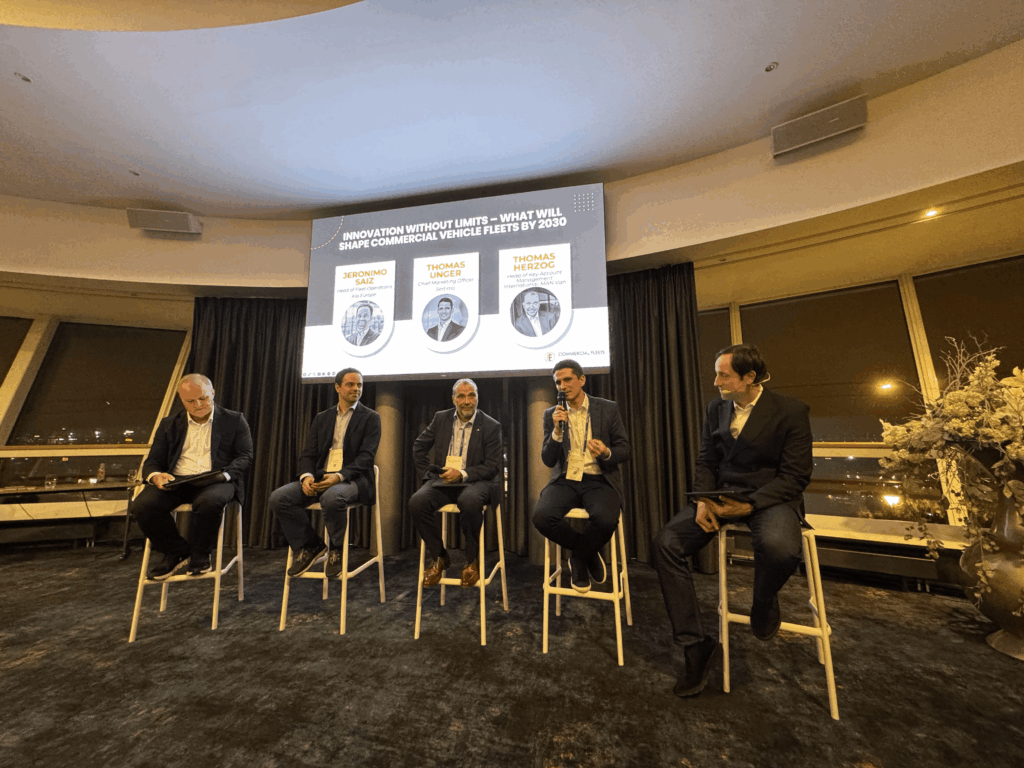
For some, the future of connected fleets is about much more than the vehicle itself. ‘Today is not about having the best van. It is about having the integration of the whole system,’ explained Jeronimo Saiz, head of fleet operations at Kia Europe.
‘You need to look at not only purchasing the van, but also having the telematics, a fantastic upfit and the best financing partner. It is a huge advantage. You are going to save money with energy consumption, route planning, how and where you service the vehicle, and how you forecast,’ he added.
For this advantage to come to fruition, fleet connectivity across the whole ecosystem is vital. Telematics partners, maintenance partners, and the vehicle itself all need to work together. However, for many, that potential is yet to be realised.
‘Most of the large fleets are not yet fully connected. We are not getting the very best out of what we could. Connectivity, together with AI, should drive savings, more efficiency and better fleet management,’ projected Saiz.
Yet any advantages may not just appear in the balance sheet. With the help of AI, a more connected LCV fleet may present other material benefits.
‘When you talk about normal wear and tear, this is what I think could be the biggest advantage of AI, to reduce [unnecessary] stops,’ highlighted Thomas Herzog, head of key account management international, MAN Truck & Bus AG.
‘Yes, we make revenue in our workshops. But if we can reduce it and help to have the van only stop working once per year, then that is beneficial for all of us,’ he added. ‘What we are facing is the chance with AI to escape from routine work and daily routines to have more time and capacity to interact with customers.’
AI agents in fleets
Some of the most advanced fleets are using AI to help operations. However, the effectiveness of these agents is still reliant on data from the field.
‘How do we see fleet management in the future? At the centre, there should be an AI agent that brings the data of various systems together,’ stated Fabian Seithel, associate vice president of sales and business development EMEA at Geotab.
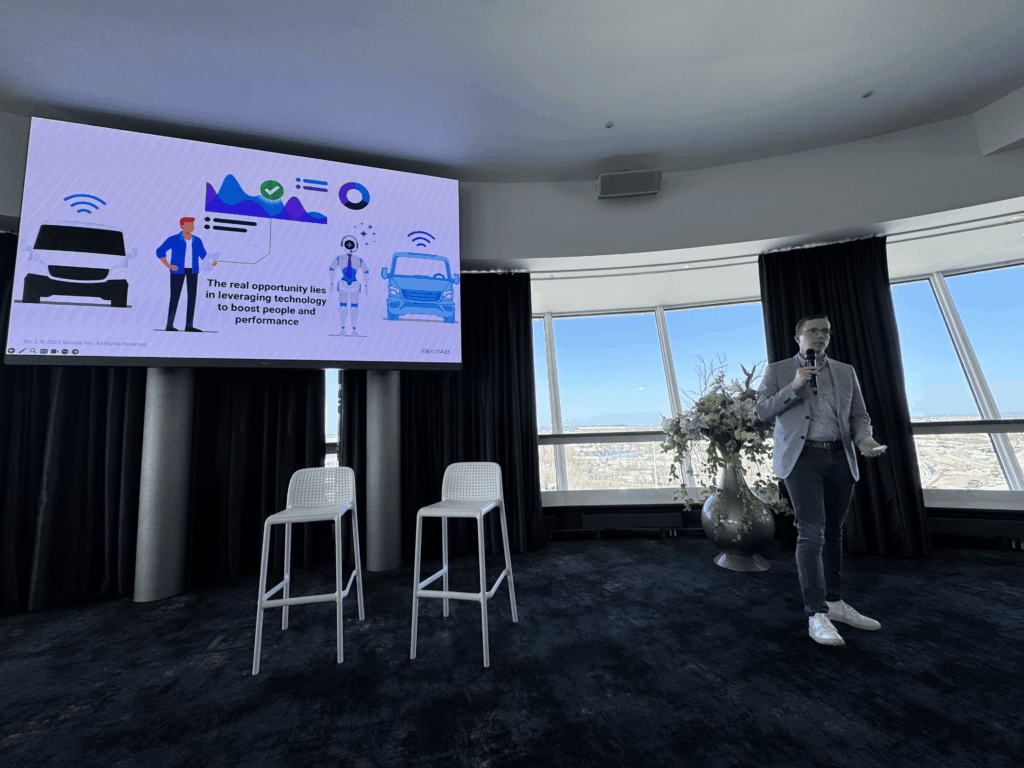
‘Today, data is siloed far too much. That makes it very difficult for AI to act. A lot of it depends on input. So, the future should be an AI agent acting independently but supervised by a fleet manager who sets the tone for the agent,’ he commented.
A clear shift
This marks a clear shift away from using multiple telematic systems and towards more unified and automated operations.
‘Telematics started with track and trace a long time ago. Then it moved to data extraction: I want to know the fuel level [of a van in my fleet] or a fault code. But now, we are in the AI-powered phase,’ Seithel said.
These systems can observe, plan, act and evaluate. For fleets, this means they can identify a problem, decide what to do and trigger the next step.
Seithel cited maintenance as a clear example, outlining Geotab’s analysis of data from 5.8 million vehicles. The aim was to understand breakdown patterns and engine faults, providing an actionable risk model for fleets.
‘So, we quantify the risk of breakdown, such as 50%, then a fleet can use those predictions. Some fleets are more risk averse then others. For example, maybe in December, a delivery fleet takes the risk of a 50% breakdown to get as many parcels out as possible. We cannot drive the decision, but we can quantify the risk and explain it using contextual data,’ he explained.
Another use case presented was a video-based AI coach. Observing driver behaviour, the coach could give instructions in real-time. For example, it can suggest removing a distraction or taking a break.
Goldmine of fleet data
Some experts argued that a major issue commercial fleets face is getting concrete value from multiple data points.
‘Every fleet is sitting on a goldmine of data. The issue we have across the industry is getting the value out. That data is a challenge for us, because the industry keeps calling what we call faster clipboards,’ said Danielle Walsh, founder and CEO of Clearly.
‘Back in the day, we held a physical clipboard and wrote down what was wrong with our fleet and how it could be managed. We then moved to the electronic age, putting data into a spreadsheet or an electronic form,’ she said.
‘That moved into the connected age, with a lot of connectivity, and we created dashboards or spreadsheets in the cloud. Now, we are in the intelligence era, and we are stuck,’ Walsh stated.
She highlighted that on paper, a vehicle may appear to be in an acceptable condition. Yet, once maintenance, fuel, and finance data are combined, the story can change. Perhaps the vehicle needed servicing, not replacement, for example.
‘You can do three things when you connect your data. First, you can see what drives your cost. Is it across driver behaviour, the maintenance or the asset? Second, you know when to replace the asset, not when the lease says so. Instead, drive the decision by data. Third, make decisions on data, not policy,’ said Walsh.
Ultimately, better fleet data should not just confirm prior assumptions but inform what decisions are made.
Tactical fleet electrification
After fleet managers discover the recommended outcomes, the next step is to act. However, when it comes to electrification, there are barriers to overcome in building confidence in these decisions.
‘The fleets responsible for ordering the vehicles have environmental, social and governance (ESG) targets, net-zero targets, or regulations asking them to electrify faster,’ outlined Alfred Richard, co-founder and CEO of Nelson.
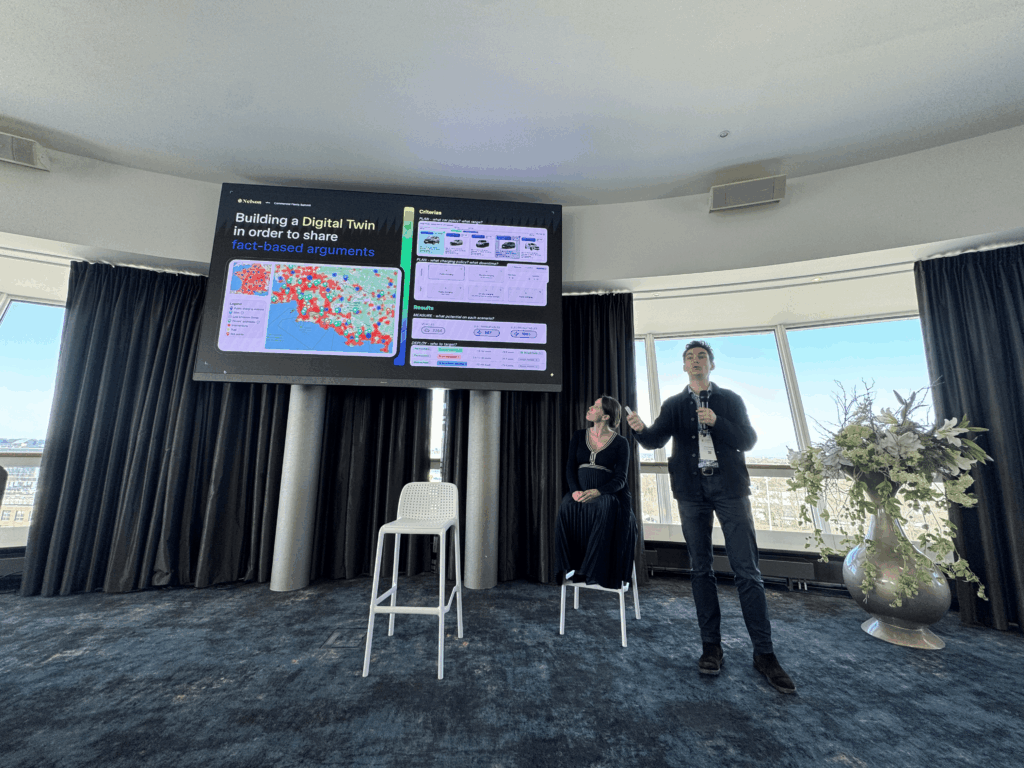
‘However, you have an operations manager slowing down the entire process because they are afraid of the productivity loss. How do you convince managers at the head office level and site level?’ he questioned.
The solution may be connected fleet software. With more transparency and openness, the gap between aspirational fleet managers and hesitant site teams could be bridged.
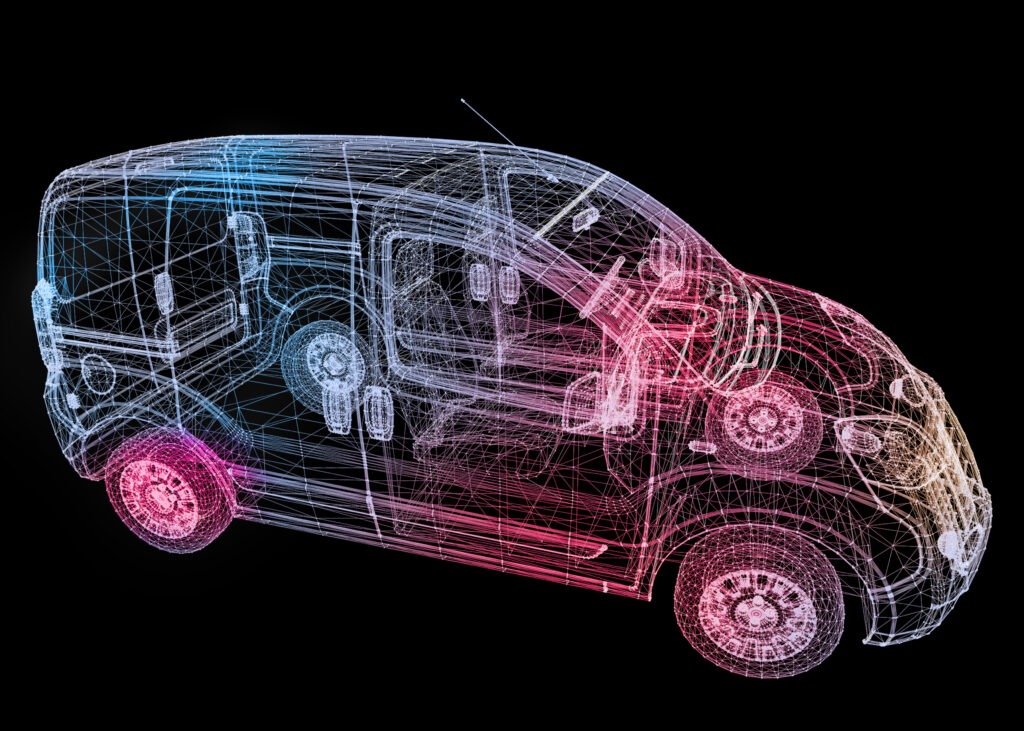
Before making decisions, Richard argued that fleets need to simulate real-world scenarios using a digital twin. Driver profiles, charging needs and route patterns all matter.
‘Simulation is a powerful thing. When you know what is happening, when you can control your current usage, you may anticipate what comes next. Thanks to all the existing data layers, you can build a digital twin of your fleet and simulate scenarios,’ he said.
This can also help avoid oversimplified fleet strategies. Richard warned that when talking about the transition to electric LCVs, there is no one-size-fits-all solution.
‘You can run scenarios on the digital twin and see what the priority is. The goal is to know your fleet’s EV suitability at a global scale, but also have information driver by driver. It is not about electrifying everyone. It is about electrifying the suitable drivers,’ he said.
Connected fleets are moving into a more active and autonomous phase. Fleet managers still want control, but less clutter. Accessing actionable insights coming from one unified source will be key. Those who can achieve this will have a distinct advantage over others.