

The Automotive Update: Carmakers accelerate AI applications at CES 2026
08 January 2026

Which carmakers and technology companies are betting big on artificial intelligence (AI), and how do they plan to use it? Autovista24 editor Tom Geggus picks out key talking points from this year’s CES in The Automotive Update podcast.
Major automotive companies are integrating AI into their vehicles. This means technology companies such as Nvidia are becoming integral partners in this seismic industry shift. However, they are not alone, as automotive suppliers are looking to keep up.
Subscribe to the Autovista24 podcast and listen to previous episodes on Spotify, Apple and Amazon Music.
Mercedes-Benz leans into AI with Nvidia
Mercedes-Benz used CES 2026 to confirm that the new CLA will feature the AI-powered Mercedes-Benz Operating System (MB.OS). This advanced driver-assistance(ADAS) technology is powered by Nvidia’s full-stack drive software, AI infrastructure and compute power.
This could assist over-the-air updates (OTA), including planned upgrades to the MB.Drive drive-assistance technology. This is aimed at enabling advanced SAE Level 2 capabilities in complex urban settings.
Mercedes-Benz confirmed its electric GLC will utilise MB.OS, as well as AI from Microsoft and Google in its infotainment system. The model is set to arrive in the US in the second half of this year.
‘As the automotive industry embraces physical AI, Nvidia is the intelligence backbone that makes every vehicle programmable, updatable and perpetually improving through data and software,’ said Ali Kani, vice president of automotive at Nvidia.
Nvidia is also working on a collection of open-source AI models called Alpamayo family, designed to accelerate autonomous vehicle development. Plus, the company announced that its Drive Hyperion ecosystem will expand to include more automotive companies. This comes as it embraces advanced SAE Level 4 and full self-driving technology.
Afeela and AI assistants
Sony Honda Mobility brought a new vehicle to CES 2026, the Afeela Prototype 2026. A production version of the model could launch in the US in 2028. Its predecessor, the Afeela 1, has been available for reservations in California since January 2025.
Delivery hubs are set to open this spring in the US state. Arizona will see sales in 2027, with Japan due to see deliveries in the first half of that year. Sony Honda Mobility also unveiled the Afeela personal agent, an interactive, conversational AI. It will use Microsoft Azure OpenAI to provide personalised dialogue.
BMW gave a demo of its AI-powered personal assistant. Built on Amazon’s Alexa+ technology, the assistant was presented within the Neue Klasse debut model, the BMW iX3.
Users can interact with the car’s large language model to control in-vehicle operations. The assistant also has access to information beyond the car, allowing it to answer a broad range of questions. This technology will be gradually rolled out in Germany and the US in the second half of 2026.
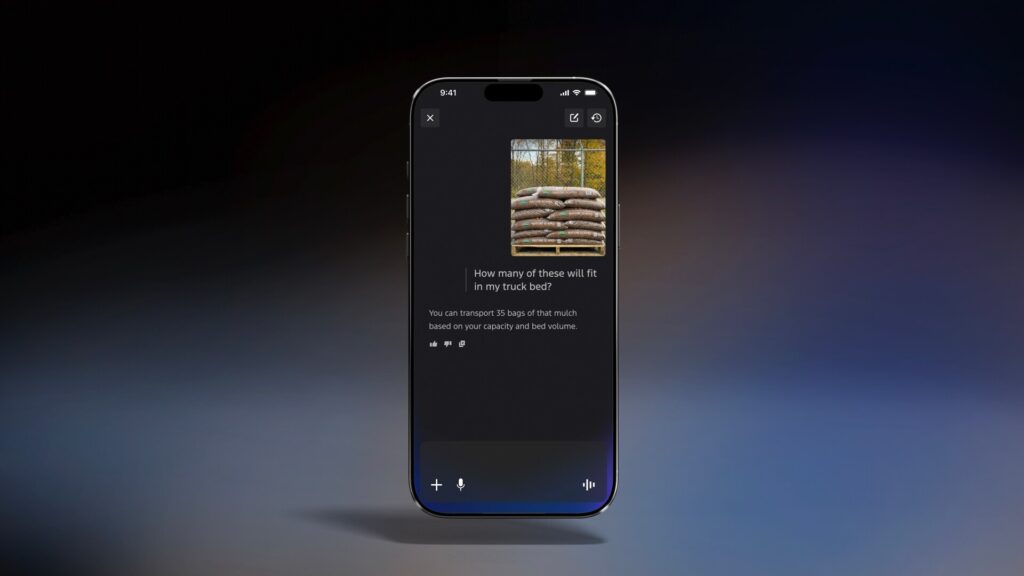
Ford also announced it will roll out an intelligent assistant. It will be available on users’ phones before it reaches their cars. The Ford and Lincoln apps will support the technology beginning in the first half of this year. The carmaker said it plans to reach up to eight million customers.
The Ford AI Assistant promises to be capable of providing contextually useful information, such as vehicle storage capacity. This technology looks set to arrive in Ford and Lincoln vehicles by 2027.
Architecture and autonomy
Geely brought its full-domain AI 2.0 to CES 2026. This unified vehicle-wide architecture utilises a central intelligence engine, capable of operating all vehicle functions. The autonomous driving system, Geely Afari Smart Driving, uses AI and large-scale real-world driving data. It features high-performance sensors, plus hardware for confident and safe driving.
‘AI is reshaping the automotive industry in many ways, from powertrains and components to a systematic reconstruction of mobility ecosystems and lifestyles,’ said Jerry Gan, CEO of Geely Auto Group.
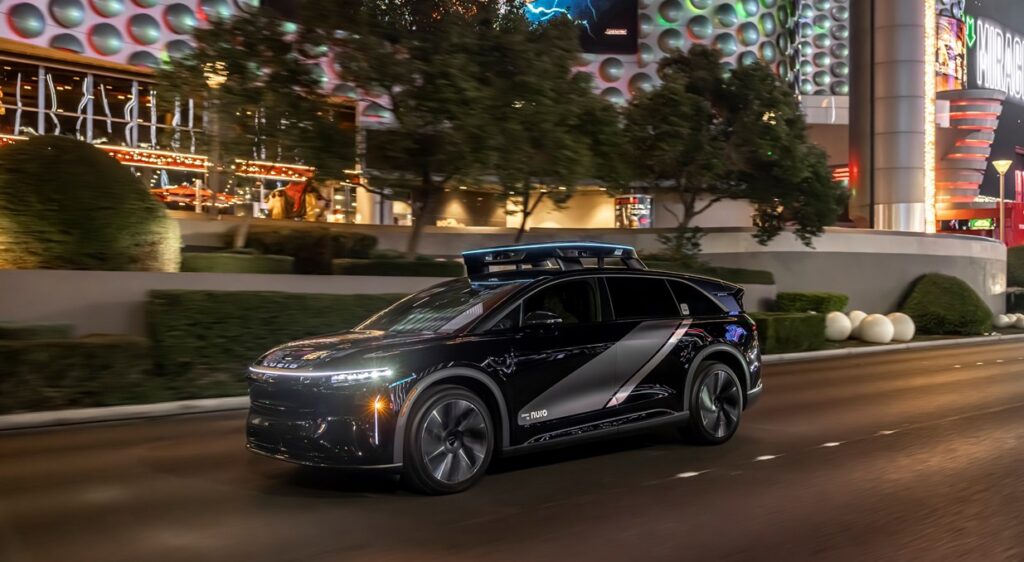
Lucid confirmed a union with Uber and physical-AI company Nuro to produce vehicles for a global robotaxi service. Autonomous on-road testing began in December, ahead of an expected launch in the San Francisco Bay Area later this year.
Suppliers starring at CES
Bosch showcased an all-in-one, personalised, AI-based cockpit. Life-like communication appears possible via large language model. Meanwhile, a visual language model can interpret what is happening inside and outside the vehicle.
Qualcomm confirmed it is working with ZF to deliver scalable ADAS solutions. Leapmotor’s D19 will use Qualcomm’s Snapdragon Elite platform. It combines cockpit, driver assistance, body control and connectivity into one system. The supplier also plans to expand its collaboration with Google to develop software-defined vehicles while accelerating in-vehicle, agentic AI technology.
‘As the automotive industry rapidly evolves into an AI-powered, software-defined future, our continued collaboration is more critical than ever,’ said Patrick Brady, vice president, engineering at Google.
LG’s Mobility Display Solution turns the windshield into an intelligent interface. The Automotive Vision Solution enhances safety and delivers context-aware information via Vision AI. The In-Vehicle Entertainment Solution provides personalised content recommendations, memory-based media, plusreal-time translation.
‘We are bringing our future mobility vision to life by embedding AI across our solutions – many of which, including in-cabin sensing, are already in production with global OEMs,’ said Eun Seok-hyun, president of the LG Vehicle Solution Company. ‘By accelerating these innovations to market, we aim to pioneer the era of AI-driven vehicles in the years ahead.’