New-car registrations soar in Italy amid looming EV incentive issues
14 April 2026

The new-car market in Italy remains on a high, as March ended the first quarter with another positive performance. But does split authority-decision making jeopardise the country’s electric vehicle (EV) market? Autovista24 special content editor Phil Curry examines the figures.
Following a difficult 2025, Italy’s new-car market has seen a strong first quarter of 2026. The period was rounded off by a 7.6% year-on-year increase in volumes during March. This is according to the latest data from industry body ANFIA.
In total, 185,257 passenger cars were registered in the month. As March is traditionally a high-volume period for new-car deliveries in Italy, growth is important. The figures were the best for the third month of the year since 2019. An extra 13,028 units took to Italy’s roads compared with March 2025, according to Autovista24 calculations.
In the first quarter, 484,577 new cars made their way to customers in Italy, an increase of 9.2%. Following a rollercoaster 2025, the strong start to this year will be encouraging for carmakers in the country.
Italy embraces the BEV
Italy’s new-car market was driven by EV registrations. Without deliveries of plug-in hybrids (PHEVs) and battery-electric vehicles (BEVs), registrations would have fallen by 1.1% in March.
BEVs registrations improved by 72.1% last month, with 16,121 units delivered. This equated to an additional 6,754 units compared to one year ago.
The increase helped the powertrain overtake PHEVs in terms of volume and share for the first time this year. By the end of the month, BEVs held an 8.7% share of total registrations, an increase of 3.3 percentage points (pp).
After three months of 2026, the BEV market was up 65.7% compared to the first quarter of 2025. In total, 38,084 units were delivered, translating to a market share of 7.9%, up 2.7pp year on year.
The BEV market in Italy struggled in previous years. While numbers rose, their share of registrations was low. Although the current hold of the overall market is below that of Germany, the UK and France, it has expanded rapidly in 2026.
Italy’s BEV performance this year also matches Spain’s surge in 2025. It was another country that held a low all-electric share compared to other major European new-car markets before volumes improved.
Surging BEV volumes in Italy can be partially attributed to the implementation of incentives in the country. All the subsidies were claimed for within a day of their announcement. However, industry body UNRAE highlighted what it sees as issues with the scheme.
Struggles ahead for EVs?
‘Urgent action is needed on the issue of incentives: the dealer network has advanced these funds out of its own pocket, exposing itself to liabilities running into millions of euros and incurring significant financial costs,’ commented Roberto Pietrantonio, president of UNRAE.
‘It is therefore essential to guarantee certain and rapid payment times, prioritising correctly processed applications, in order to safeguard the stability of the supply chain and strengthen the credibility of public measures,’ he continued.
There may be other obstacles in the path of electrification. From 1 July, BEVs and hydrogen vehicles will need to pay an annual charge to enter Rome’s congestion-control zone. While the cost of €1,000 is around half that for internal-combustion engine (ICE) vehicles, it still represents an additional cost for drivers.
‘This measure is difficult to comprehend in a country where the proportion of electric cars is still significantly lower than in the main European markets, where any revisions to incentives have only been made in the face of much higher levels of adoption,’ highlighted Pietrantonio.
The fear is that localised interventions without wider government alignment, risk creating uncertainty for buyers. Fragmented measures, such as congestion charging, could end up slowing the transition to cleaner mobility, Pietrantonio warned.
PHEVs remain popular
While BEVs saw higher volumes than PHEVs, the latter experienced greater growth in March. With 15,805 deliveries, numbers were up by 100.7%. Market share also jumped, by 3.9pp, to 8.5% in the month.
Within the first quarter of the year, PHEVs recorded a rise of 110.1%. With triple-digit growth in each month of the year so far, this amounts to 40,052 units, an improvement of 20,990 deliveries.
The powertrain remained ahead of BEVs in the cumulative chart, with a share of 8.3%. This is a rise from the 4.3% PHEVs recorded during the first three months of 2025.
UNRAE attributes this popularity to an increase in models being offered and corporate fringe benefits. The technology is forging ahead and helping to establish EVs in the marketplace.
Combining BEV and PHEV registrations, EVs saw 31,926 deliveries in March, a rise of 85.2%, according to Autovista24 calculations. This gave the powertrain group a 17.2% market share, up by 7.2pp year on year.
In the first quarter, 78,136 EV models made their way to customers, an increase of 85.8%. This equated to a 16.1% market share, up by 6.6pp compared to the first three months of 2025.
Italy’s hybrid domination continues
Hybrids, made up of full and mild versions, were the leading technology in Italy’s new-car market during March. As buyers and carmakers alike move away from petrol and diesel, they are increasingly turning to hybrid models.
In the month, 93,241 units were delivered, a rise of 20.2%. According to Autovista24 calculations, this was an improvement of 15,674 units, 1,748 models more than the combined loss of ICE units.
This meant that hybrids dominated the market in the month. The powertrain group secured 50.3% of total registrations, up by 5.3pp compared to the same period last year.
The powertrain also dominated in the first quarter of 2026. With 249,430 units delivered, it was the only technology to break into six-digit figures. It ended the three-month period with a 51.5% market share, up 6.8pp. Its nearest challenger, petrol, was 31.7pp behind.
Adding hybrids to EV registrations, the electrified powertrain group was dominant in March. Electrified models took a 67.6% share of all deliveries, up 12.6pp year on year. In total, 125,167 units took to Italian roads, a 32% rise.
Between January and March, the electrified sector held a similar 67.6% share of the market. This was a 13.5pp rise, with volumes reaching 327,566 units.
Diesel plunge continues in Italy
Petrol and diesel powertrains continued their downward trend in Italy. The powertrain group suffered a combined drop of 21.7%, as 50,203 units were registered in the month. The ICE market was responsible for 27.1% of the country’s total, a drop of 10.1pp compared to March 2025.
Diesel cars have proven more popular in Italy than in the other big five European markets. But with 12,747 registrations in March, their volumes fell 29.6% year on year. The powertrain held a 6.9% share, down 3.6pp on 12 months prior.
Meanwhile, petrol registrations fell by 18.6%. The fuel type remained the second-biggest seller in Italy during the month. However, its 37,456-unit total was only good enough for a 20.2% market share. This was a fall of 6.5pp year on year.
In the first quarter of 2026, ICE deliveries fell by 19.9%, with just 130,135 registrations. The group held 26.9% of the market, down 9.7pp. Broken down, diesel managed 34,089 deliveries, equating to a 23.6% decline. This gave the powertrain a 7% market share, down 3.1pp year on year.
Petrol recorded 96,046 registrations in the three-month period, an 18.6% drop. This was good enough for a 19.8% hold of the country’s total, falling 6.8pp compared to the first quarter of 2025.
Stellantis dominates the market
According to ANFIA figures, Stellantis and the Renault-Nissan Alliance led the country’s new-car market in March.
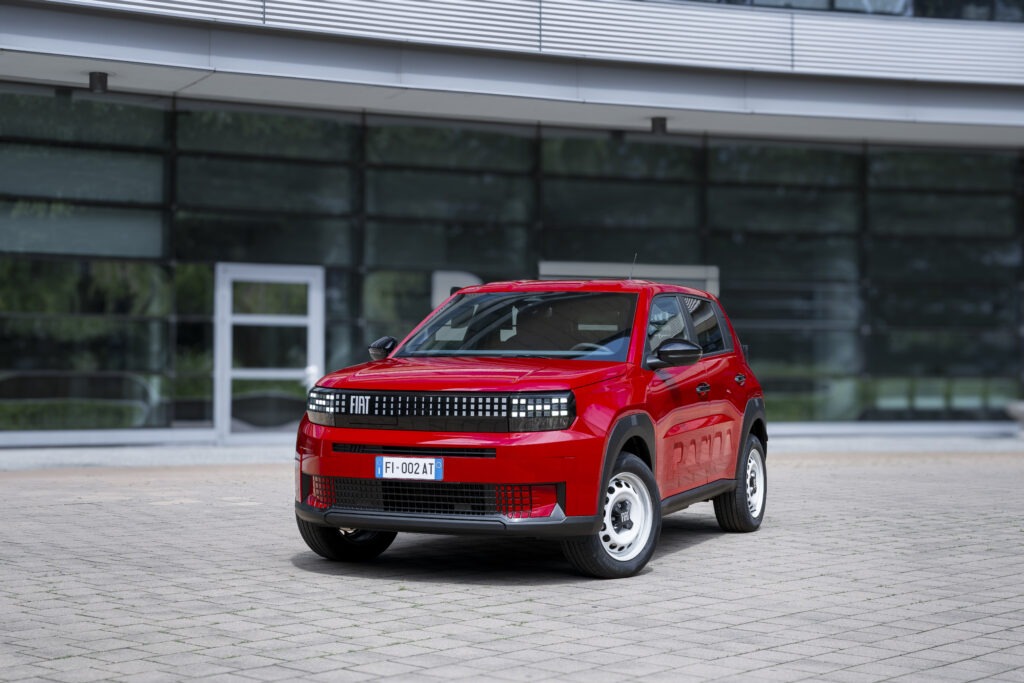
Stellantis celebrated the success of the Fiat Panda in its home market. It saw 11,117 registrations, more than double the Jeep Avenger in second. The model managed 5,085 deliveries and ended March just 63 units ahead of the Leapmotor T03 in third.
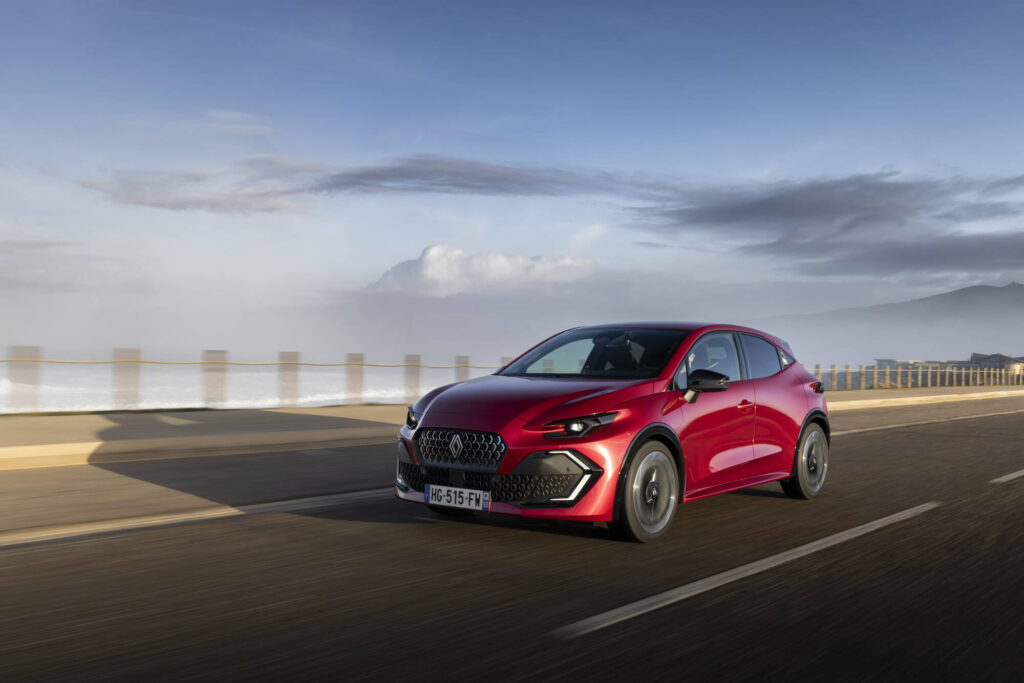
The Fiat Grande Panda took fourth, while the Citroen C3 was sixth. Between the two sat the Dacia Sandero in fifth, leading a slew of models from the Renault-Nissan Alliance. In seventh was the Renault Clio, with the Nissan Qashqai following, and the Dacia Duster taking ninth. Rounding out the top 10 was the Toyota Aygo X.
The result means the Fiat Panda extended its lead after the first quarter, with 37,010 registrations. The Jeep Avenger was the second-best-selling model in Italy, with 15,808 deliveries. Third was the Fiat Grande Panda, with 13,180 units.