Which countries are leading the global EV charging race?
29 May 2026
With increasing numbers of electric vehicles (EVs) on the roads, the need for more public charging infrastructure will only grow. But which country is currently leading the way? Autovista24 editor Tom Geggus explores the data.
With data from 75 markets, EV Volumes provides insights into the global expansion of public EV charging infrastructure. This covers the number of locations a particular connector type can be found, more accurately reflecting the variety of chargers.
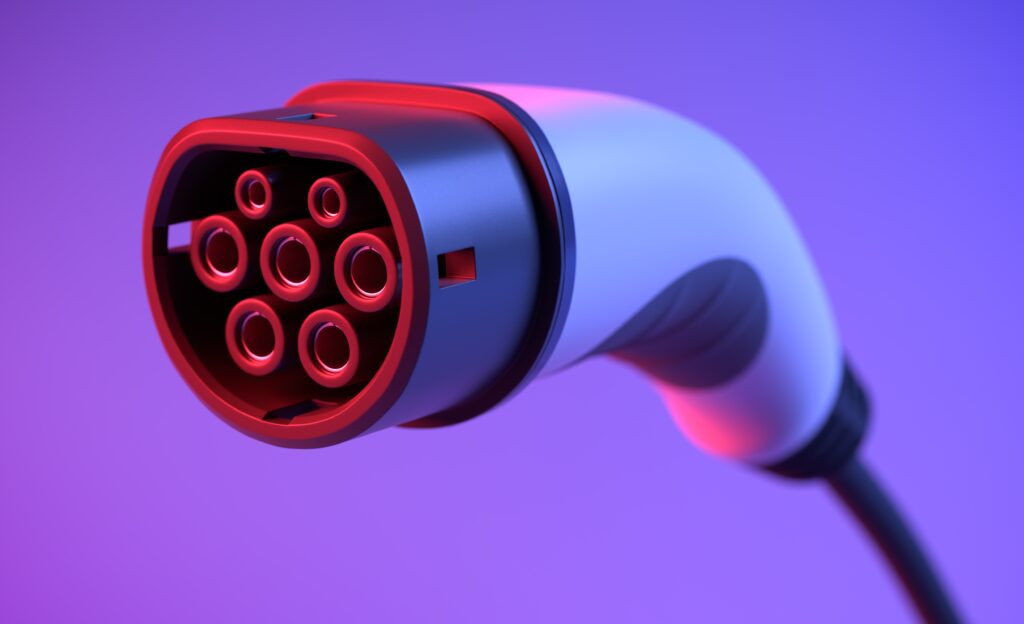
For example, a station with two CCS plugs equates to one location. However, one CCS connector and one CHAdeMO connector would count as two locations.
By this metric, there were 4,821,516 public charging stations around the world in May 2026. This marked an increase of 25.2% compared with May 2025, signalling a continued slowdown in the pace of infrastructure expansion.
Following an 81.8% leap in May 2023, the rate of new public infrastructure installation has slowed. May 2024 saw a year-on-year jump of 42.6%, followed by a smaller 34.8% hop in May 2025.
Fast and normal charging
Since 2021, fast chargers have accounted for an increasing share of available public infrastructure. These DC plugs usually offer between 50kW and 60kW outputs with reserves for upgrades, EV Volume states. Connectors include CCS, CHAdeMo and GB/T in China.
As of May 2026, fast chargers made up half of all public stations recorded by EV Volumes. This figure has climbed steadily since late 2021, eating into the share of normal chargers. Including type 1 and 2 points with an output up to 43kW, these predominantly AC stations took a 49.8% share.
Meanwhile, ultra-fast chargers have seen their marginal share fall slightly since late 2023. Capable of providing up to 350kW of power, these DC points include Ionity infrastructure, Tesla Superchargers and Fastned.
As EVs feature larger batteries and more capable charging technology, drivers expect to spend less time plugged in. This accounts for the growing proportion of fast chargers and shrinking share of normal plug-in points.
However, many EVs on the road are not capable of ultra-fast charging, which is generally a feature of higher-end models. Furthermore, the infrastructure can also be more expensive to install and use. But which countries have seen the greatest deployment of charging stations?
China’s charging capacity
China currently accounts for 83.1% of global public EV charging infrastructure, according to EV Volumes data. With 4,005,618 stations recorded in May 2026, the country saw a 28% increase compared with May 2025.
This expansion makes sense given the size of China’s EV market. In the first quarter of 2026, 52.9% of all plug-in hybrids (PHEVs) were sold in the country. China even accounted for 43.5% of all battery-electric vehicle (BEV) sales in the same period.
However, the country’s new EV market has struggled recently, and the rate of charging station installations is also slowing. While figures were up recently, the growth was behind the 40.2% year-on-year increase in May 2025. A year prior to this, there was an 48.6% increase, with a 110% jump in May 2023.
Late last year, China’s National Energy Administration revealed a three-year plan to double EV charging capacity by 2027, electrive reported. This plan looks to provide over 300GWh of public charging capacity.
A European leader
After China, the country with the next largest volume of public charging stations was the Netherlands, accounting for 2.7% of plug-in points. With 131,207 plug-in points tallied, it was ahead of larger new EV markets like Germany, France, Italy and Spain.
Within the EU’s Fit for 55 package, the Alternative Fuels Infrastructure Regulation directs the rollout of public charging points. Since 2024, it has defined minimum national charging requirements to support the uptake of alternative-fuelled vehicles.
More broadly across Europe, 524,923 stations were counted by EV Volumes. This was up by 15.7%, compared with May 2025. While this lags behind China, it still reflects a more positive trajectory for the region.
In May 2025, the acceleration of installation was only up by 14.2% year on year. The year before that, it was up by 28% and 40.6% in May 2023.
US public charging challenge
According to EV Volumes, South Korea recorded 126,002 public charging stations, accounting for 2.6% of the global total. This put the East Asian nation third globally.
Some way behind it in fourth came the US, accounting for 1.8% of all plug-in points, with 88,050 stations tallied. This equated to year-on-year growth of 7.7%, slower than the 13.4% recorded in May 2025. Meanwhile, May 2024 saw public charging stations grow by 19.1%.
Sales of new EVs look to be slowing in the country. BEV sales were down by 25.7% in the first quarter of the year, while PHEVs saw a 55.5% drop. Recent policy changes have softened the EV share in the country. With National Electric Vehicle Infrastructure Formula Program funds available again, states can carry out infrastructure plans, Reuters reports.
While some new EV markets have fluctuated, models already on the roads require public charging infrastructure. If the number of stations stays stagnant, it is unlikely to inspire confidence in those considering an electric vehicle.