Launch Report: New Nissan Leaf is a legacy reborn
17 June 2026
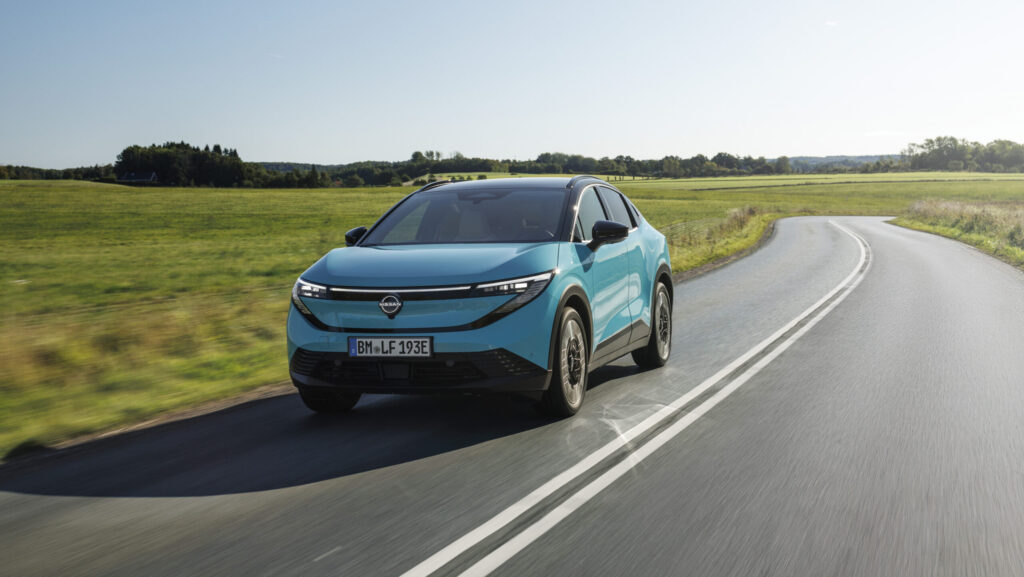
The third-generation Nissan Leaf takes a bold direction. Repurposed as a crossover with coupé styling, can this new philosophy appeal to buyers? Autovista24 special content editor Phil Curry reviews the model alongside regional experts.
The Nissan Leaf has already carved out a legacy in Europe’s automotive market. As one of the first mass-produced battery-electric vehicles (BEVs), it became a launchpad and an early symbol for the technology.
However, with increasing competition, the Japanese carmaker has taken a new direction, hoping to carve out a new legacy. As a result, the latest Nissan Leaf is a far cry from the one that landed in the C-segment in 2010.
No longer a simple hatchback, the BEV has been repositioned as a crossover with a coupé-like body design. This re-imagining has helped to refresh the model’s appeal, moving it into a world of sleek and modern styling.
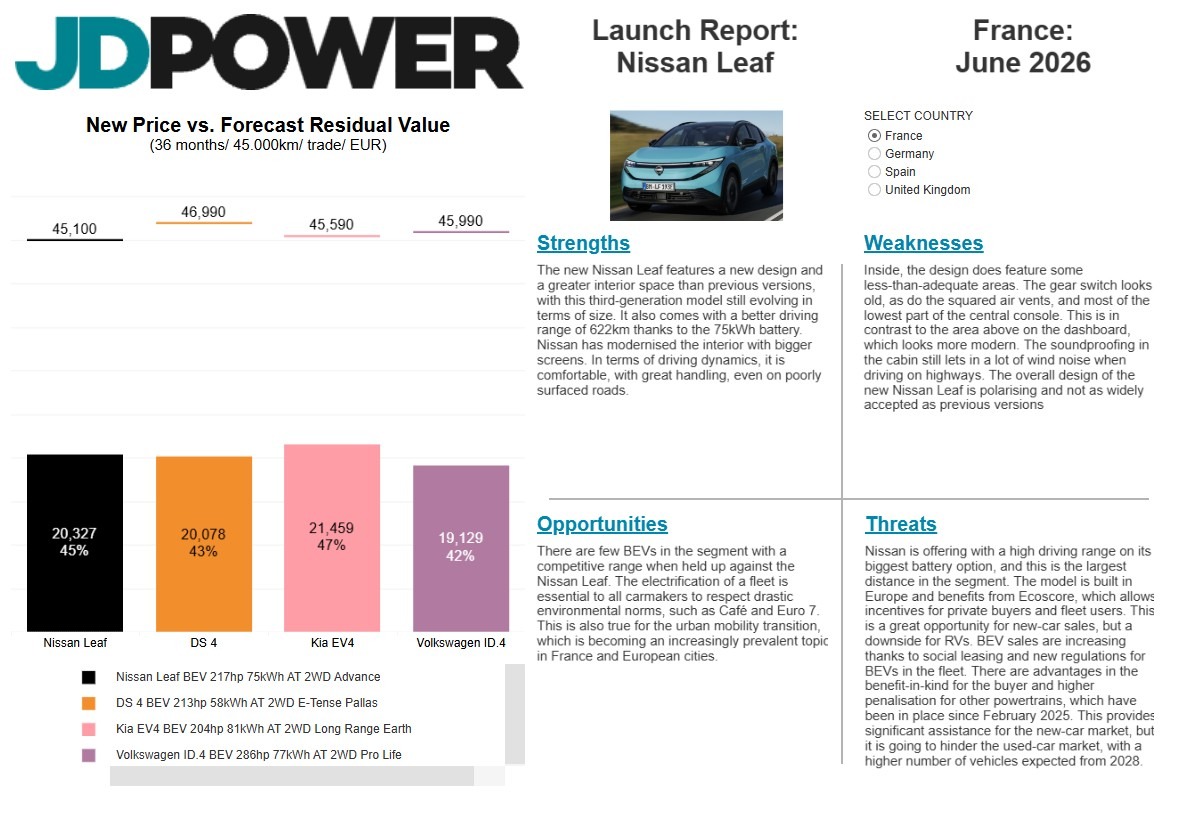
Autovista24’s latest Launch Report benchmarks the Nissan Leaf against its key competitors in France, Germany, Spain and the UK. Regional experts also provide a breakdown of the car’s strengths, weaknesses, opportunities and threats.
A bold design for the Nissan Leaf
Measuring 4.35 metres long, the new car is shorter than its predecessor. However, the change in body design comes as the Japanese carmaker revives the smaller Micra. For those looking for a larger, coupé-styled BEV, the Leaf offers some familiar design touches.
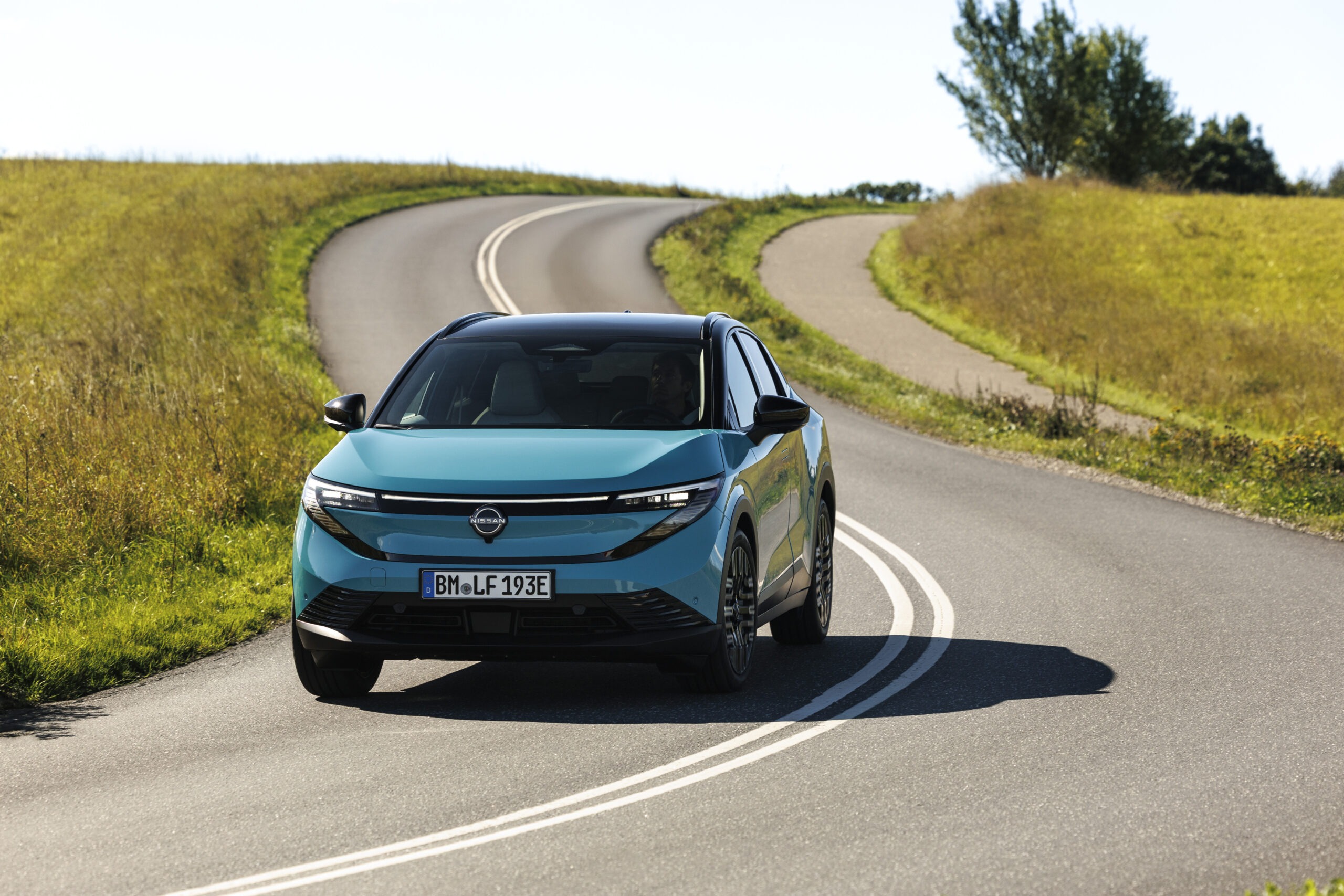
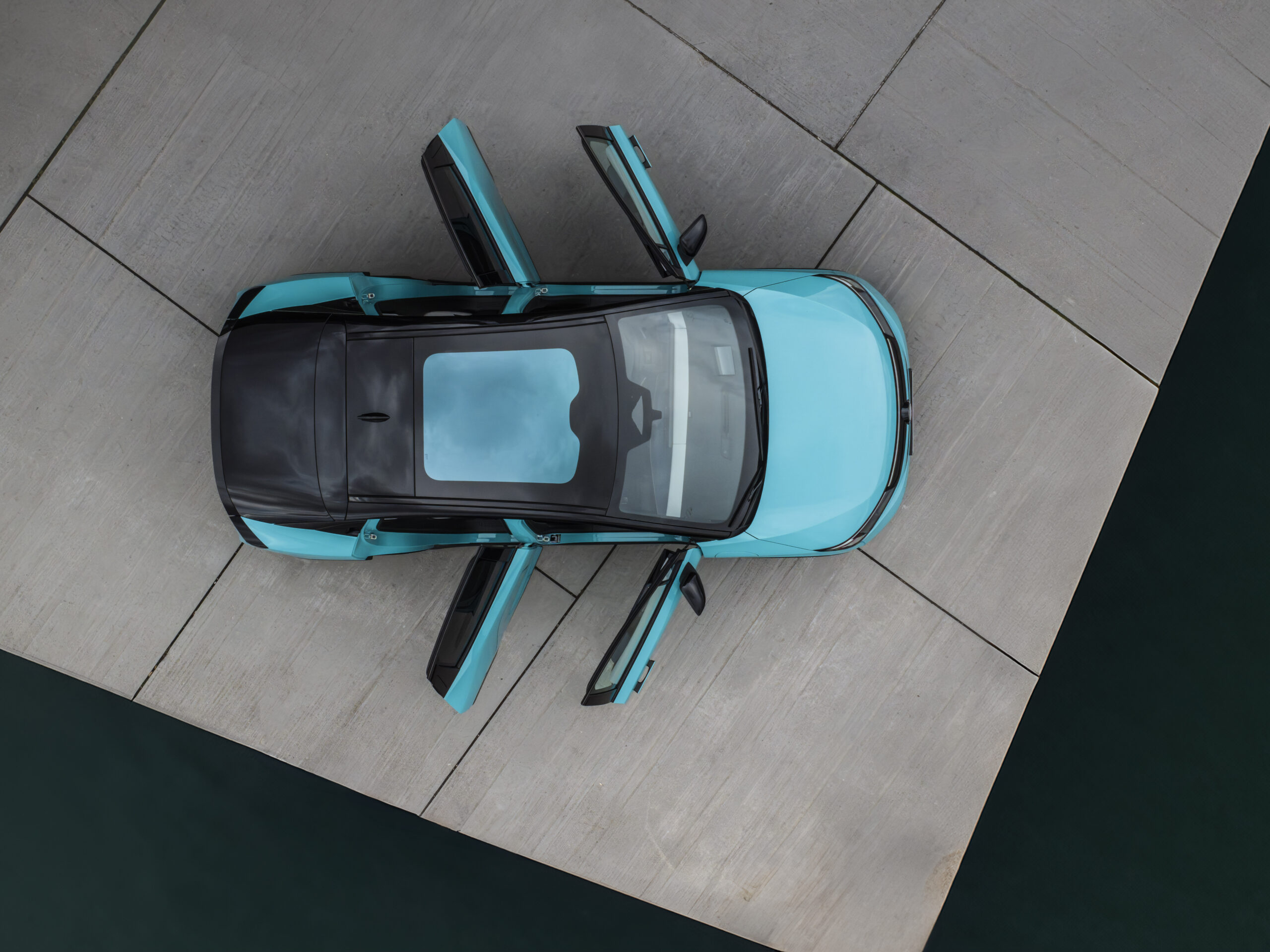
The design philosophy is similar to that of the Nissan Ariya. A long LED-bar lighting profile sweeps down each side of the ‘grill’ to provide a distinctive silhouette. The large, illuminated manufacturer’s badge breaks up what is otherwise a minimalist front end.
The new model manages to blend both sharp angles and curves with ease. The lower part of the front end forgoes any colour coding, which does stand out with lighter colour choices. Blending the coloured section in at the front wheels adds to the sharp look of the car.
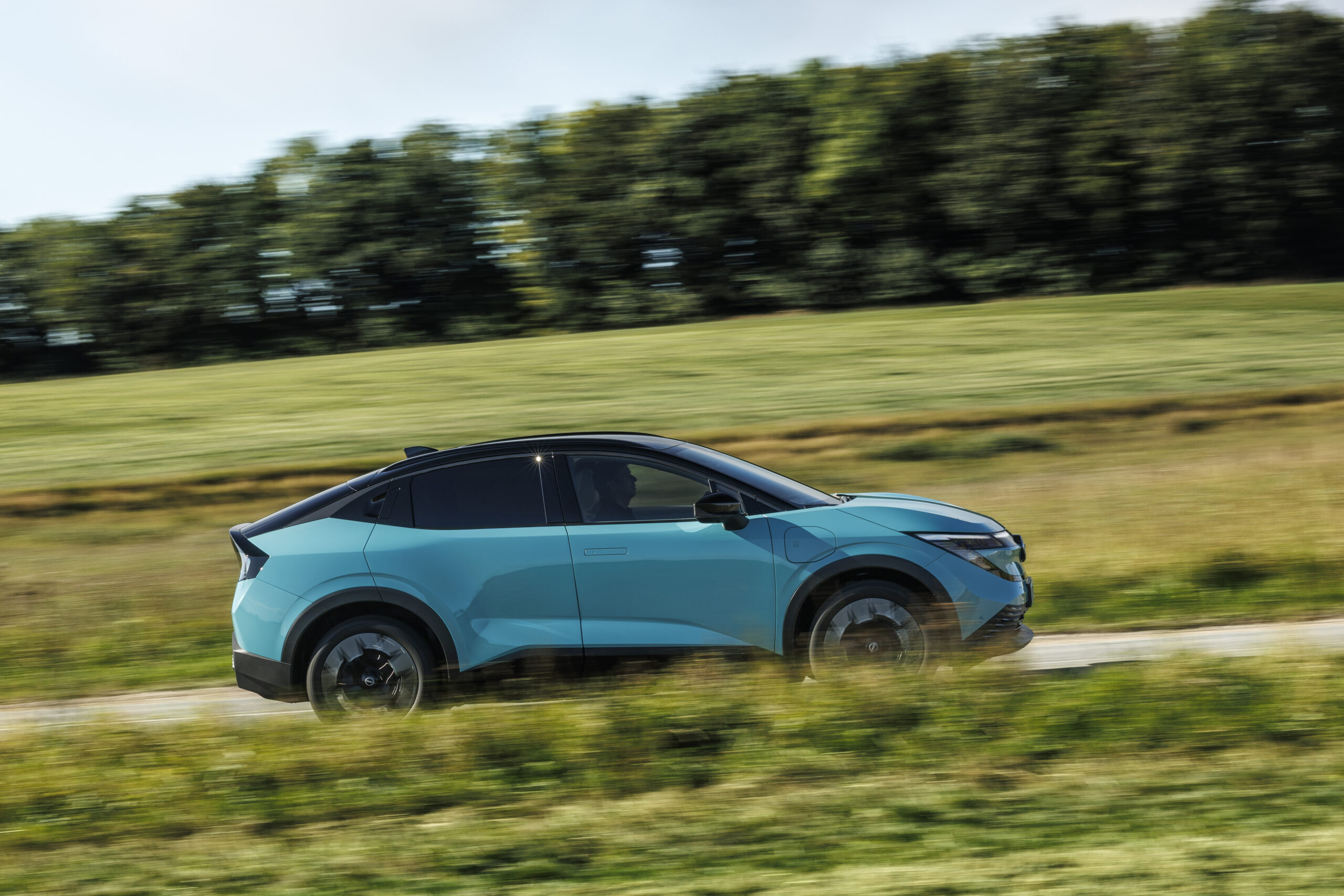
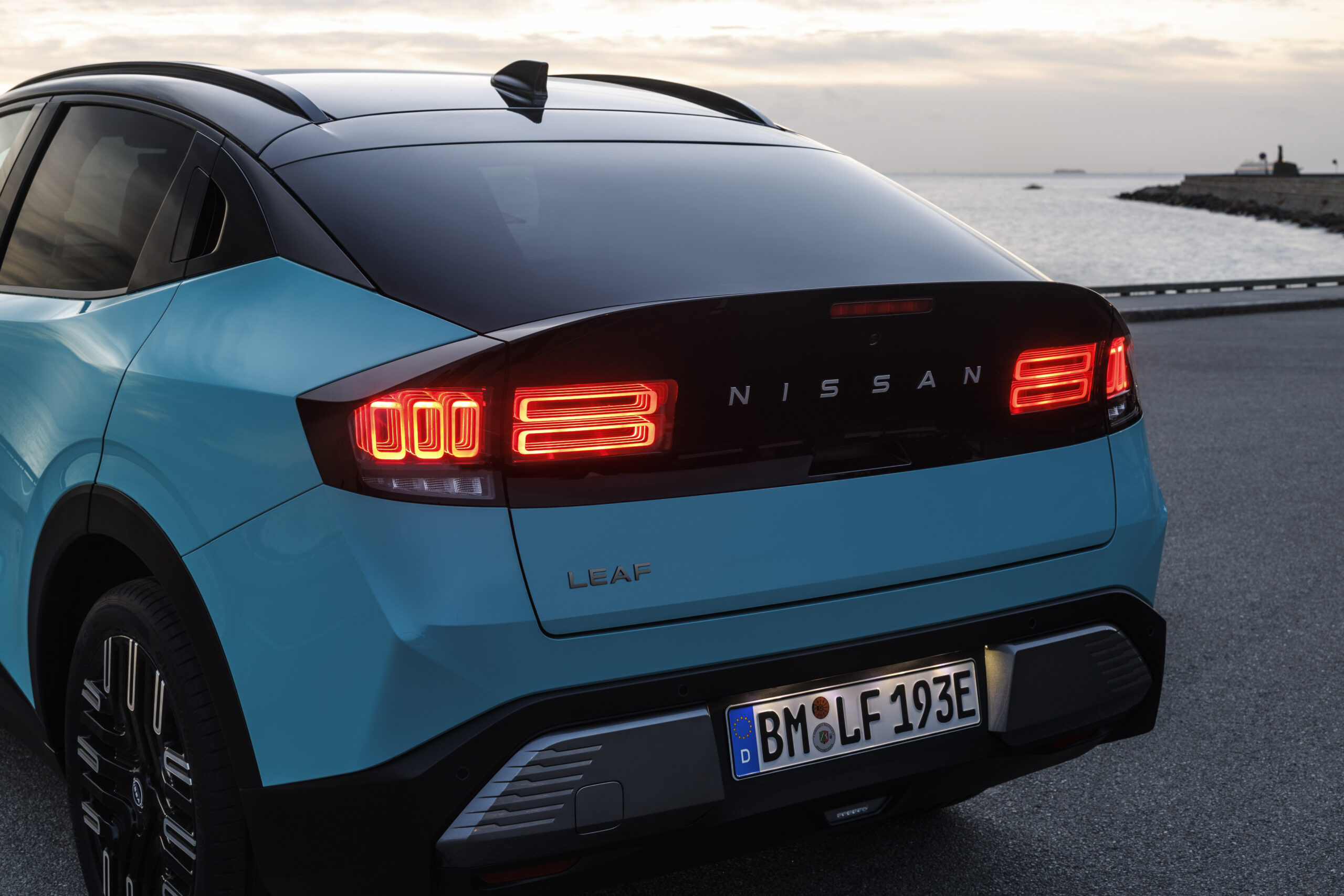
The rounded roof is designed to help reduce drag as it slants towards the rear. It feels almost familiar, considering Nissan’s curvy design philosophy of the early 2000s.
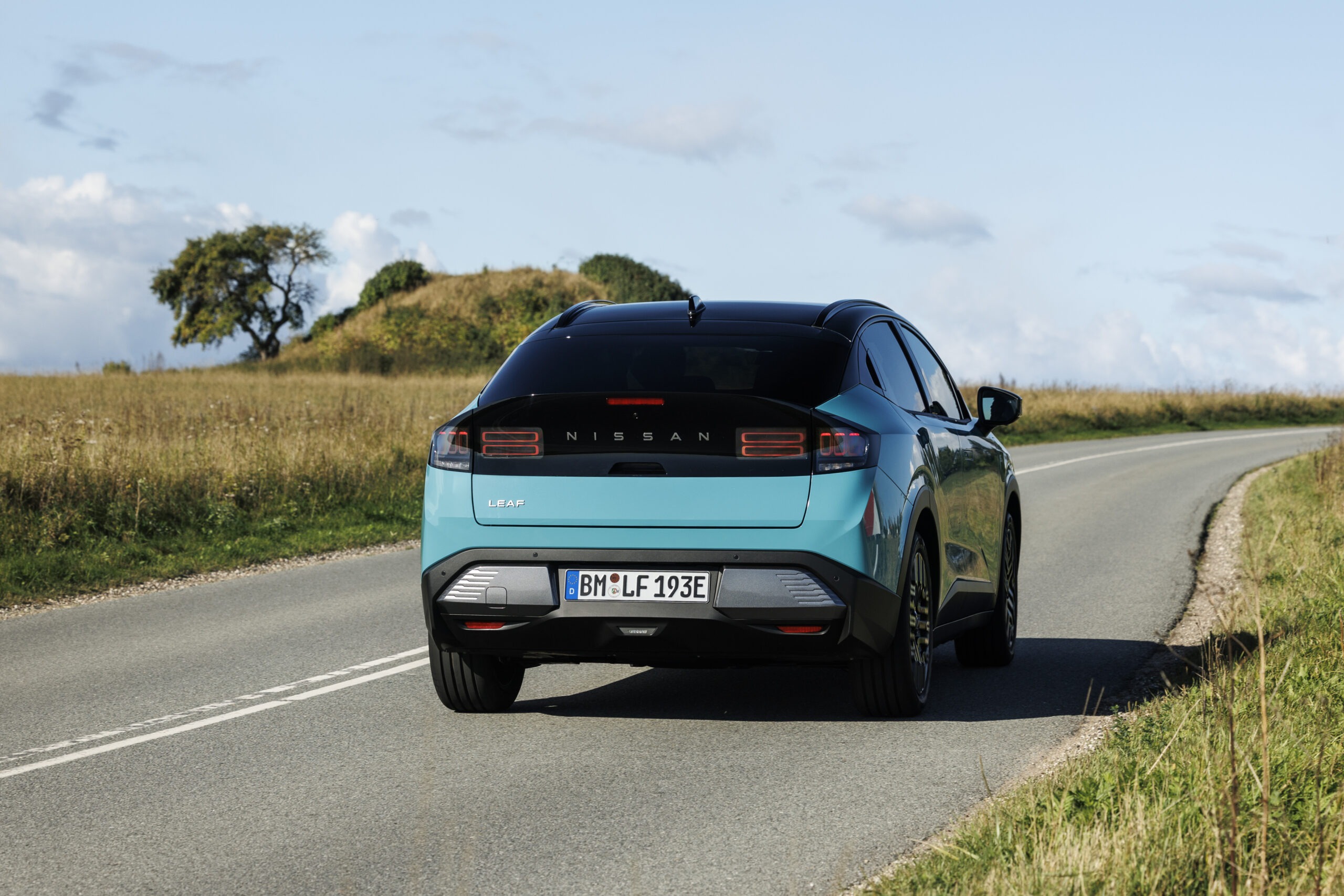
At the rear, the coupé lines end in an upward flick, as the 3D lights add another smart design touch. The lack of a rear LED bar does, however, remove any symmetry between the front and back of the car.
Mixed messages
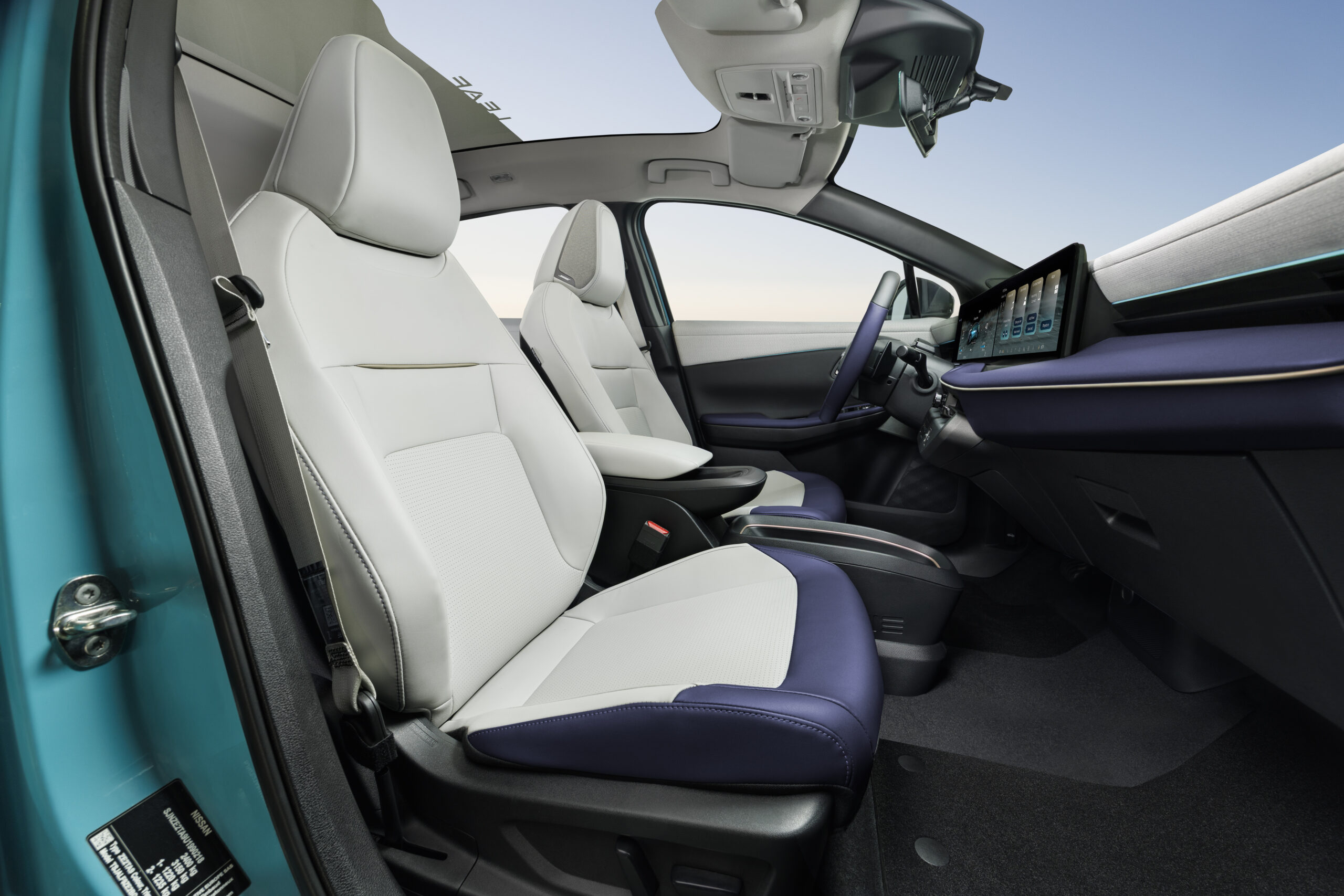
The Nissan Leaf’s minimalistic approach continues inside the cabin. Two 14.3-inch touchscreens relay information, with Google integration built in for more efficient mapping and software access.
There is also an array of physical buttons, mixed with touch-sensitive controls and touchscreen options. This may be refreshing compared to models which rely on a central touchscreen, but the approach does cause issues.
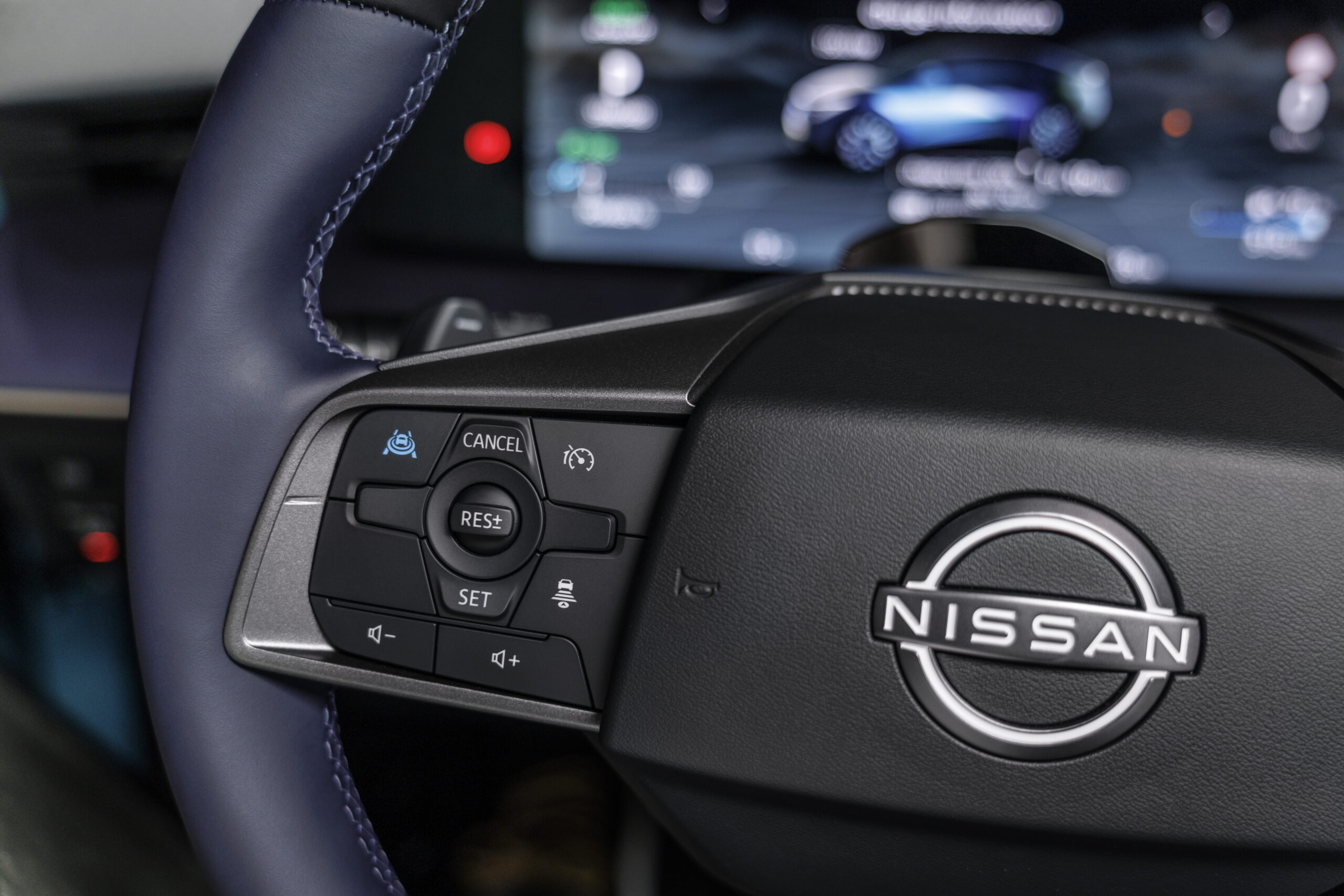
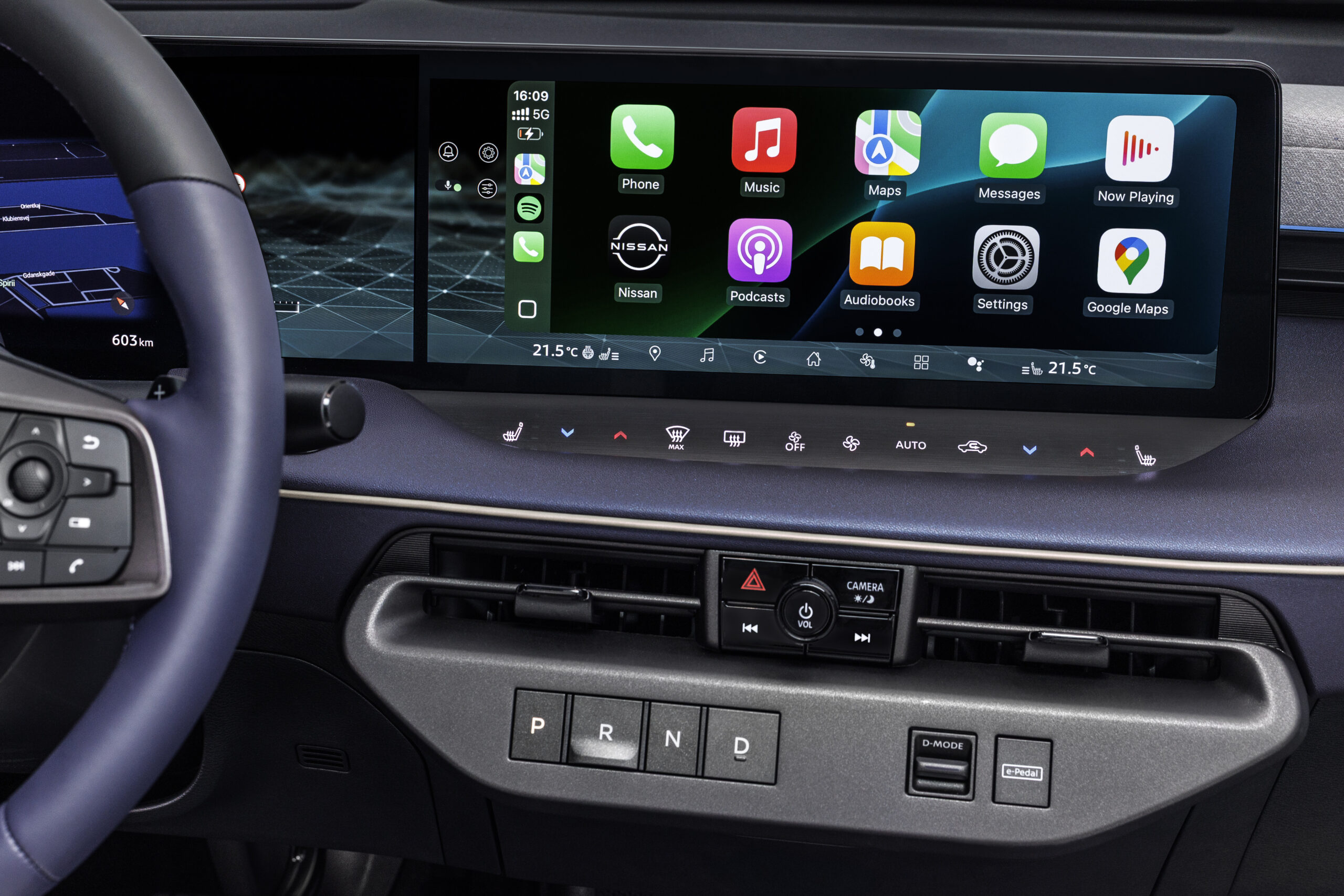
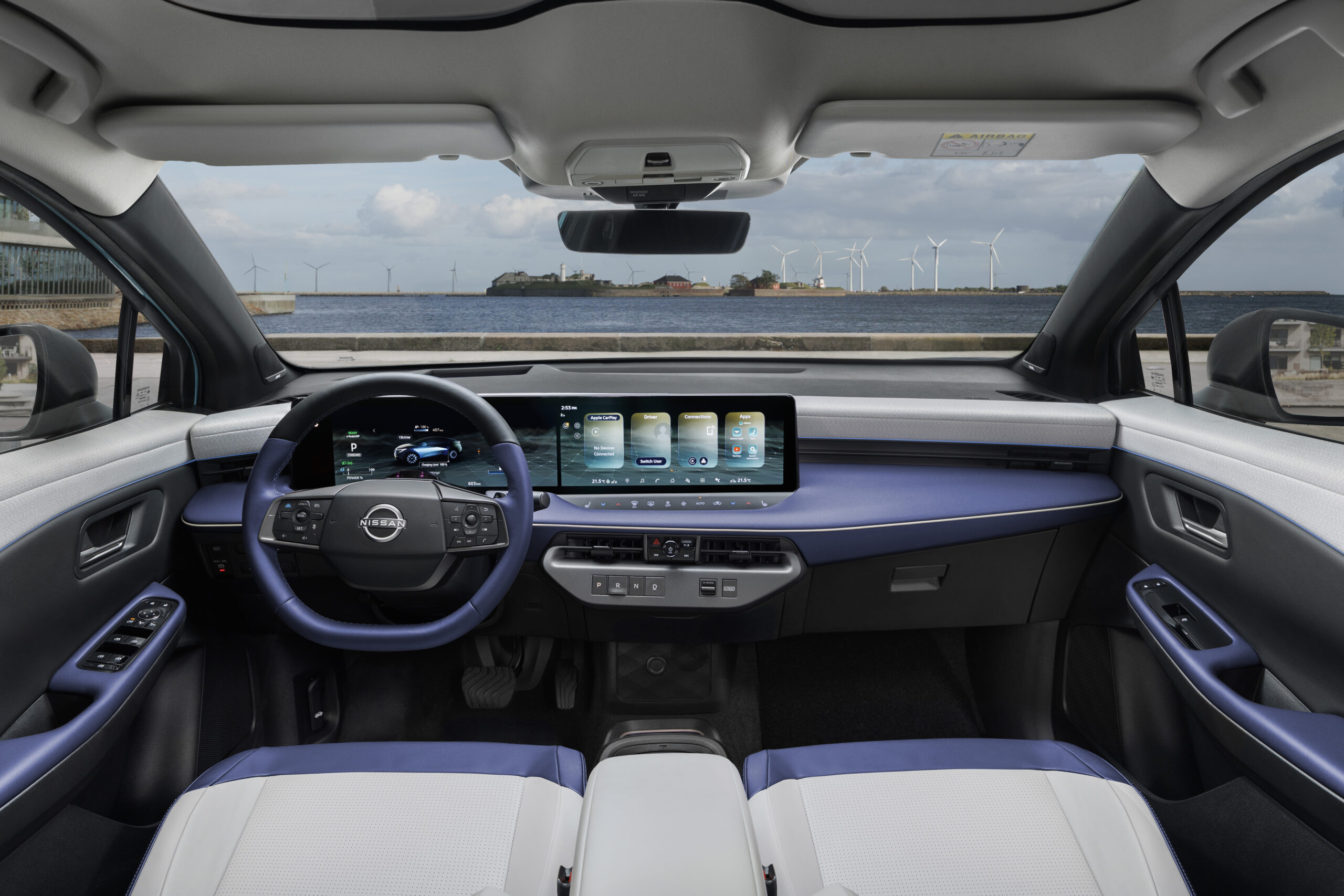
The automatic gear selection is made using buttons rather than a dedicated lever or switch. Their positioning on a separate console below the dashboard seems like an afterthought. It appears out of place compared to the sleek wraparound design of the upper portion of the dashboard.
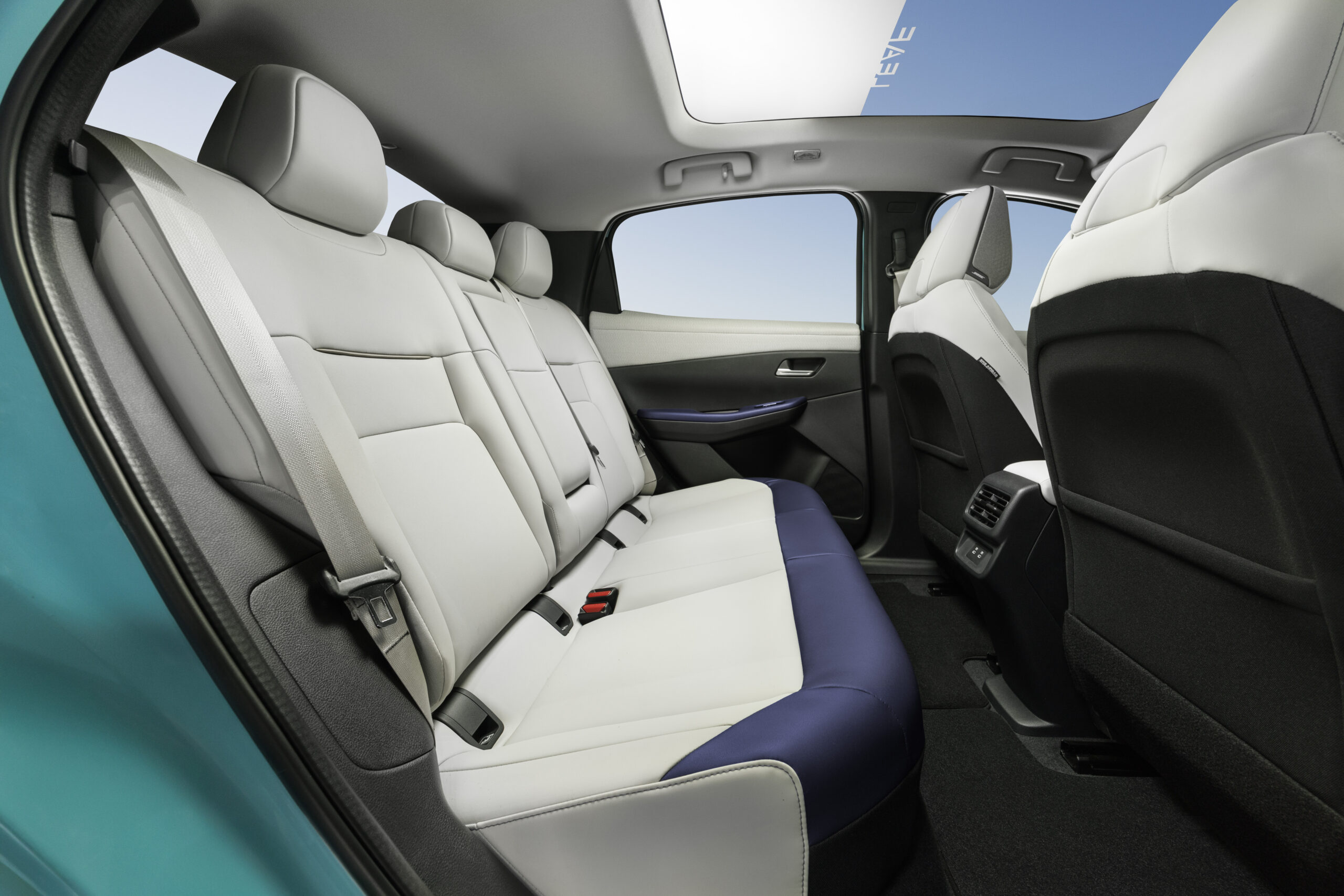
For taller passengers in the rear of the car, the sweeping roofline does cause some issues. Headroom is limited, while legroom is slightly cramped. The panoramic roof does add some extra space up top, but its main job is amplifying the light coming into the cabin. It does this well, giving the Nissan Leaf an airy feel inside.
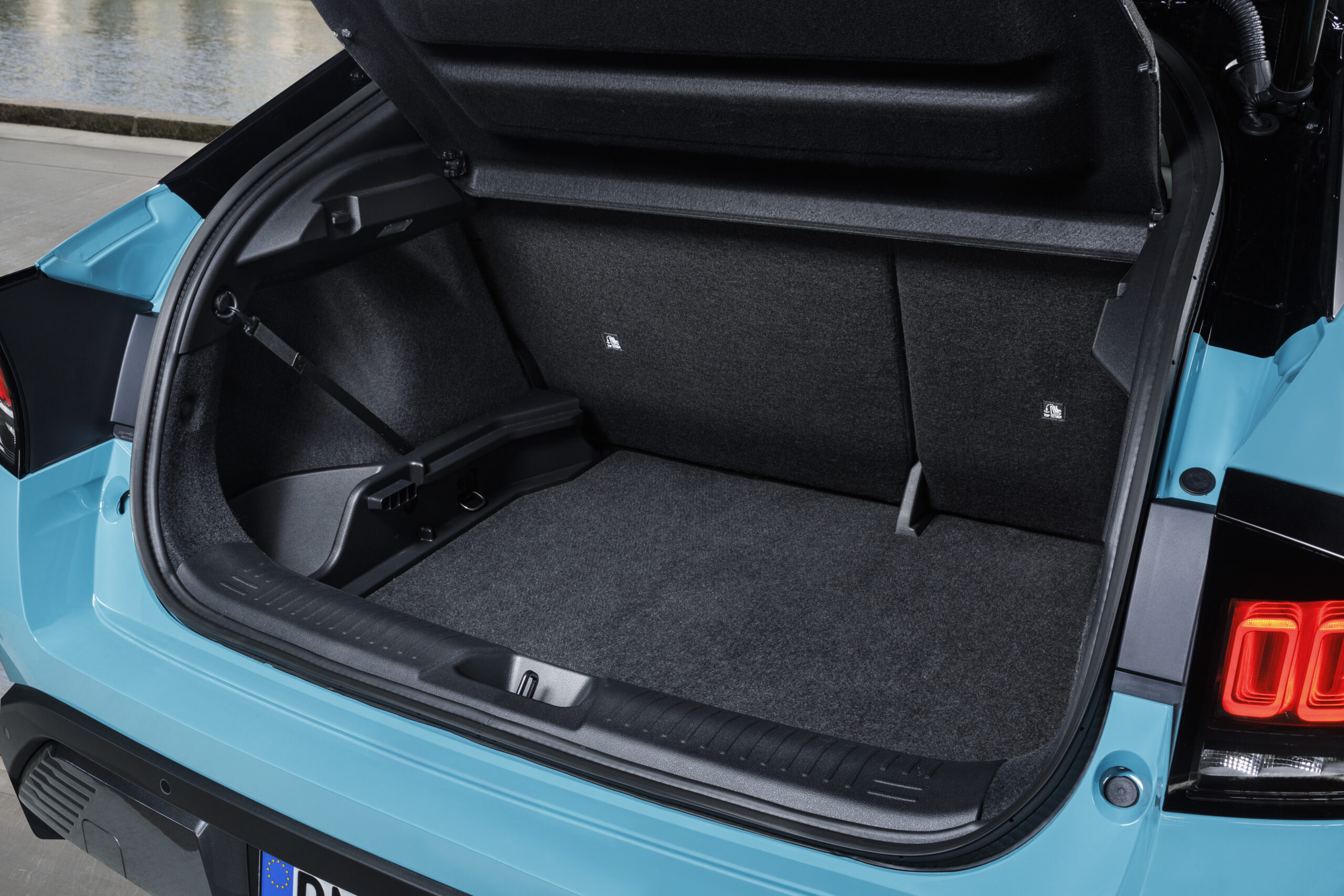
At 437 litres, the boot provides ample storage, although it does fall short of some competitors. The Leaf does have a split floor, meaning cables can be tucked away with ease. This is essential, as there is no frunk included.
The Nissan Leaf on the road
The Nissan Leaf is offered with two battery options: a 52kWh or a 75kWh unit. The smaller unit offers a range of over 440km, while the larger one can go up to 622km, based on WLTP figures. In addition, the larger battery supports up to 150kW DC fast charging.
At the same time, the new Leaf is equipped with vehicle-to-load capability. It can provide up to 3.6kW output for connecting small devices like laptops or cooking gear when out camping.
On the road, the model handles well. It is set up for comfort and provides a smooth ride, especially across poorly surfaced roads. However, this does lead to some body roll in the corners. There is also an unwelcome amount of wind noise entering the cabin when driving on motorways.
Acceleration is steady and adequate for both urban and motorway use. The Leaf also features an e-pedal function, allowing one-pedal driving. There is also the ability to use regenerative braking. However, coming to a stop from speed is compromised by a soft feeling from the pedal when pressed.
Overall, the new Nissan Leaf is a capable car, providing comfort and practicality. Its bold design and crossover transformation will ensure that the model can appeal to new customers in its third generation. Nissan’s efforts have highlighted that rather than looking to its past, the Leaf is now positioned for the future.
View the interactive dashboard, which benchmarks the Nissan Leaf in France, Germany, Spain and the UK. The interactive dashboard presents new prices, forecast residual values, and SWOT (strengths, weaknesses, opportunities, and threats) analysis.