How are AI and automation transforming automotive remarketing?
27 October 2025

Today, nearly every business is using artificial intelligence (AI) and automation in some form. The automotive remarketing sector is no exception, with efficiency and data-driven decisions key to fleet efficiency and profitability. Tom Hooker, Autovista24 journalist, reviews its current applications and future impact.
As AI continues to develop, so too do the use cases within the automotive industry. From production to in-vehicle applications, logistics to fleets, there are many applications for the technology.
Automotive executives anticipate big things from AI, even within the next three years. The technology is expected to increase the perceived value of products by 22% and the value of digital services by 37%, according to IBM.
This acceleration in automotive AI applications underlines the industry’s push for smarter, more connected, autonomous, and software-defined vehicles.
Carmakers are partnering up with AI specialists to maximise their knowledge and potential in this field. These collaborations include Hyundai Motor Group and Nvidia, Stellantis and Mistral AI, and Volkswagen Group and Amazon Web Services.
Unsurprisingly, AI and automation also present key growth opportunities in the remarketing sector. This involves reselling used vehicles, typically owned by businesses or fleets, through wholesale channels. This often occurs before hitting the retail market.
In this space, AI can enable predictive pricing, automated inspections, automatically adjusted inventory management, and automatic sourcing. These tasks help to maximise turnaround speed and recovery value, two of the major goals in remarketing.
So, how are remarketing companies currently using AI, what benefits are they seeing, and what could the future hold?
AI sourcing
To benefit from high resale margins and fast-turning stock, the right amount of quality vehicles must be quickly sourced. ScaleVoice and AURES Holdings are already using AI to source vehicles and improve response times.
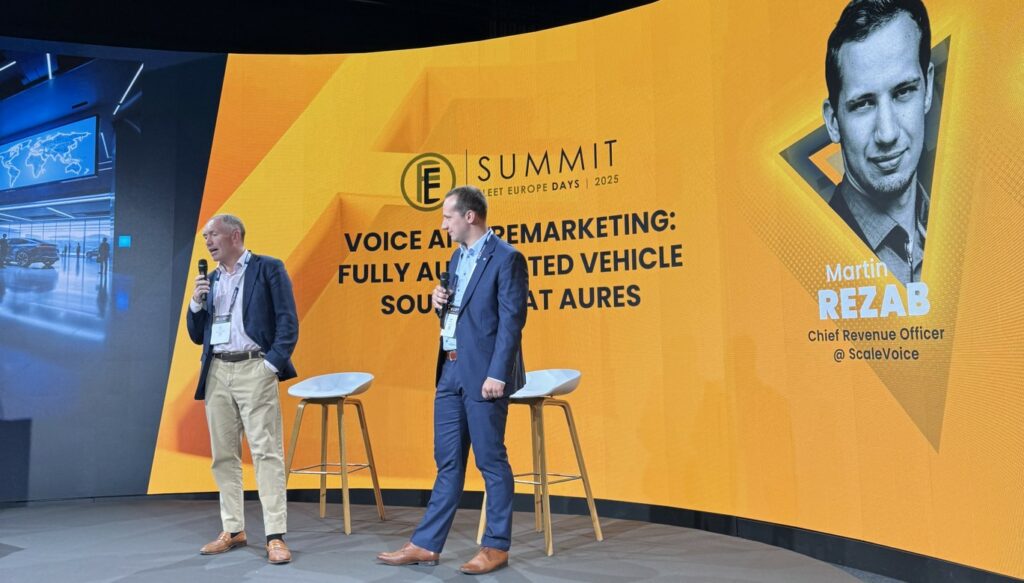
The two companies presented their Voice AI solution at the Fleet Europe Days. The AI agents can reportedly handle outbound and inbound calls, schedule trade-ins and update systems in real time.
Voice AI conducts proactive sourcing to find hidden opportunities in the marketplace. It grades adverts by predicted profit margin, stock turn and competitiveness, such as targeting private sellers with price drops. The solution can then contact the seller and schedule dealership appointments.
It also uses reactive sourcing. This means responding to incoming web form leads in under 30 seconds to catch customers in a selling mindset. Unlike a human agent, the AI can do this anytime on any day of the week. The insights gathered can then be used for future marketing and sales operations.
In a 60-day test that compared human agents to Voice AI, the latter generated 7,277 appointments. This returned a 49.2% conversion rate.
‘We had a round robin of leads, one half of the leads went to us [Voice AI], and the second half went to people, and they measured the volume of people that showed at branches. We outperformed people by two percentage points,’ highlighted ScaleVoice chief revenue officer Martin Rezab.
How to automate at scale
Other companies in the remarketing and leasing space are building AI-first cultures. One of these is the car leasing service Lizy, which has embedded automation steps into multiple processes.
A quarter of Lizy’s remarketing workload is handled without human intervention, with AI performing over 45,000 actions every month. This includes tasks such as pricing and workflow optimisation. New processes are automated across the company weekly.
For example, its paper mail and email workflows have been automated, freeing up time for employees to work on more challenging tasks.
‘We have two types of companies today. We have companies that are writing emails and recording meetings with AI. Then, you have companies that are actually fully automating their back-end processes with AI,’ explained Lizy CEO Sam Heymans.
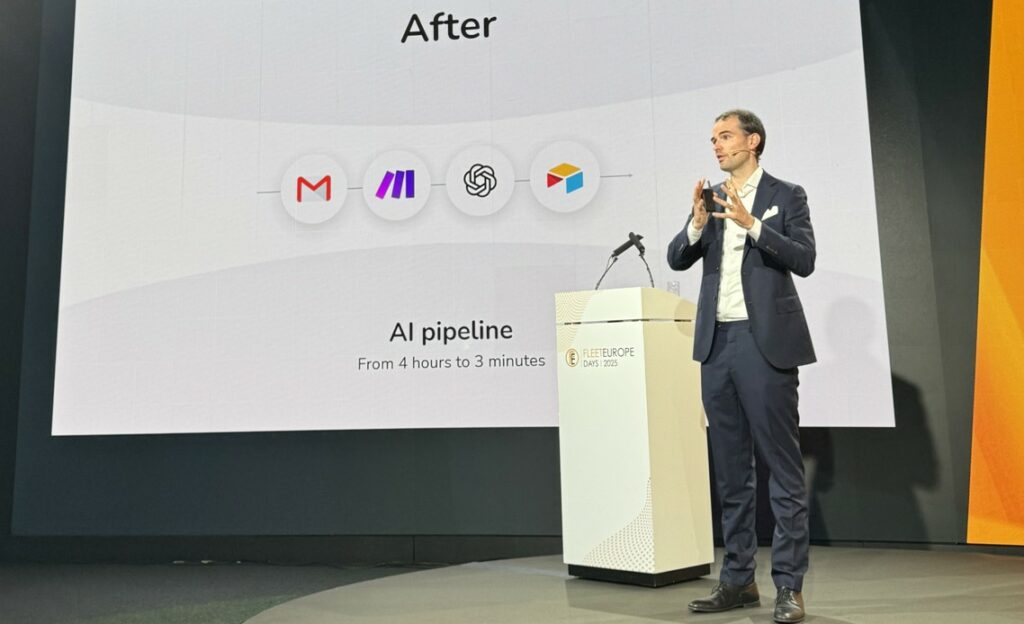
‘It is fine if you are in that first category today, but if, in five years, you are still only doing that, I think you will really suffer. I think for the leaders of our industry, we should make sure that we adopt AI and embrace it, because it will be shaping the future of automotive,’ he added.
AI inspection
An essential part of the defleeting process is inspecting vehicles. This can determine residual values and sales channel selection, while reducing risk by identifying damage, wear or missing equipment.
However, this can be a particularly time-consuming process, especially for fleets processing hundreds or thousands of cars at once. Automated inspection tools can help by reducing lead times and improving accuracy.
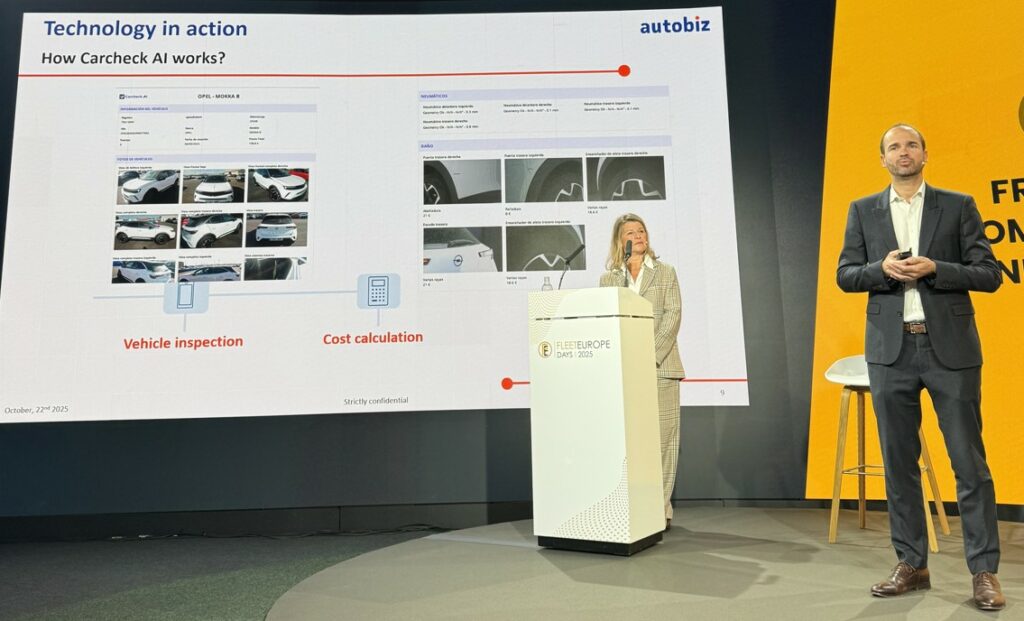
Carcheck.AI, developed by Stellantis and Autobiz Group, can use a smartphone camera to create a digital scan of a vehicle. In just a few minutes, it calculates the costs of reconditioning the model before resale.
According to Autobiz Group, the system is already being tested at Stellantis fleets in Hordain, France and Madrid, Spain. It is expected to save up to three weeks in the vehicle resale process.
Automated fleet workflow system
BCA Europe and Alphabet International displayed another example of automation at the Fleet Europe Days event. The pair demonstrated a fleet workflow system integrated into an auction platform across European markets.
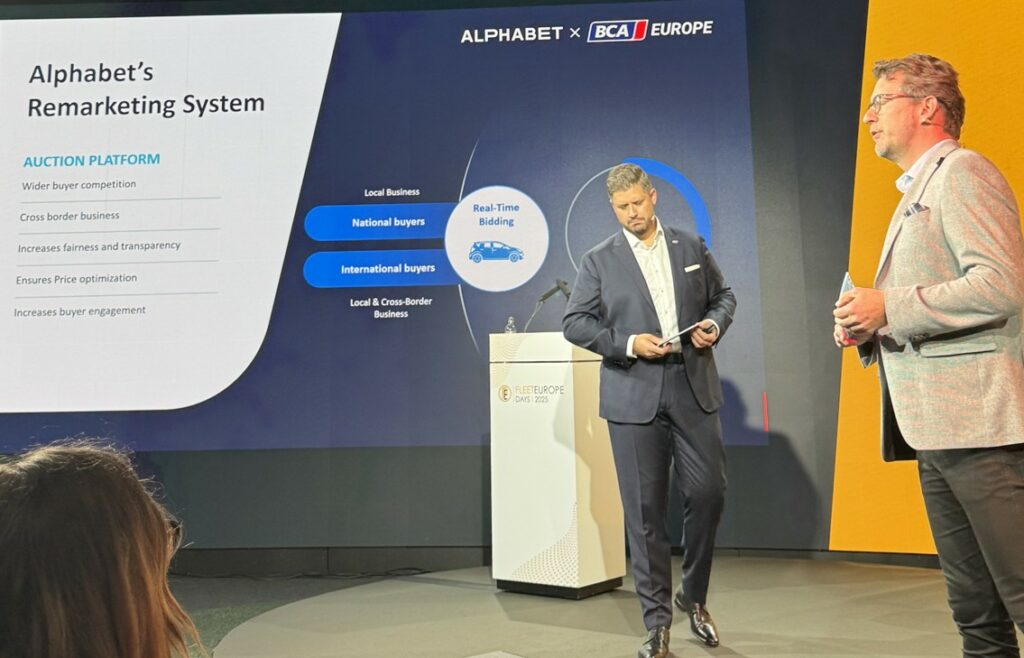
The solution optimises fleet visibility across logistics, pricing, sales, and post-sales. In turn, delivering detailed information, a smooth buyer experience, and fast vehicle remarketing. Real-time tracking is also possible, meaning shortened delivery times, improved operational control, and boosted stock rotation.
‘It has been deployed in nine markets. It consists of two main components. One is the workflow system, and that covers the process over the entire vehicle lifecycle. The second one is the auction platform,’ outlined Alphabet International head of international operations René Lorr.
‘We found a way to build up every unified process into one single workflow. I think it is the backbone of the remarketing process by Alphabet, because this system connects the people, the data and the processes together, and it brings it to a very efficient and value-driven system,’ concluded BCA Europe chief commercial officer Tobias Münch.