
Launch Report: Can the retro-inspired Fiat Grande Panda shake up the market?
17 September 2025
Fiat has evoked the past with its Grande Panda. But are retro design elements and an appeal to urban buyers enough to warrant success? Autovista24 special content editor, Phil Curry, reviews the model with Autovista Group experts.
With the Grande Panda, Fiat has taken a leaf from its back catalogue. Alongside the likes of the Renault 5, the car aims to inspire interest and sales with a familiar design which harks back to the past.
Only this time, the Italian brand has increased the Panda’s size, making it a compact SUV for today’s market. The car offers a small, boxy and modern take on a classic, with interesting design nods to Fiat’s past. It is available as a battery-electric vehicle (BEV) or a mild-hybrid (MHEV).
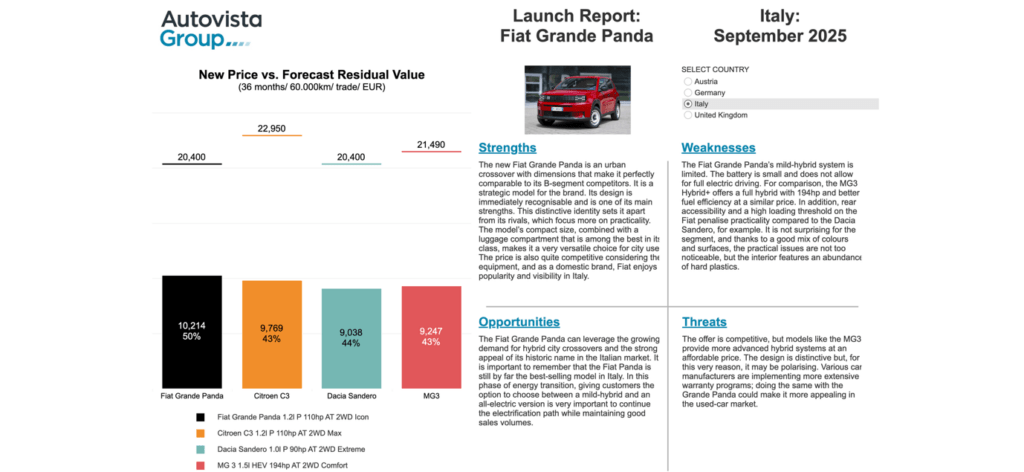
Autovista24’s latest Launch Report benchmarks the Fiat Grande Panda against its key competitors in Austria, Germany, Italy and the UK. Autovista Group experts also provide a breakdown of the car’s strengths, weaknesses, opportunities and threats.
Design flair for Grande Panda
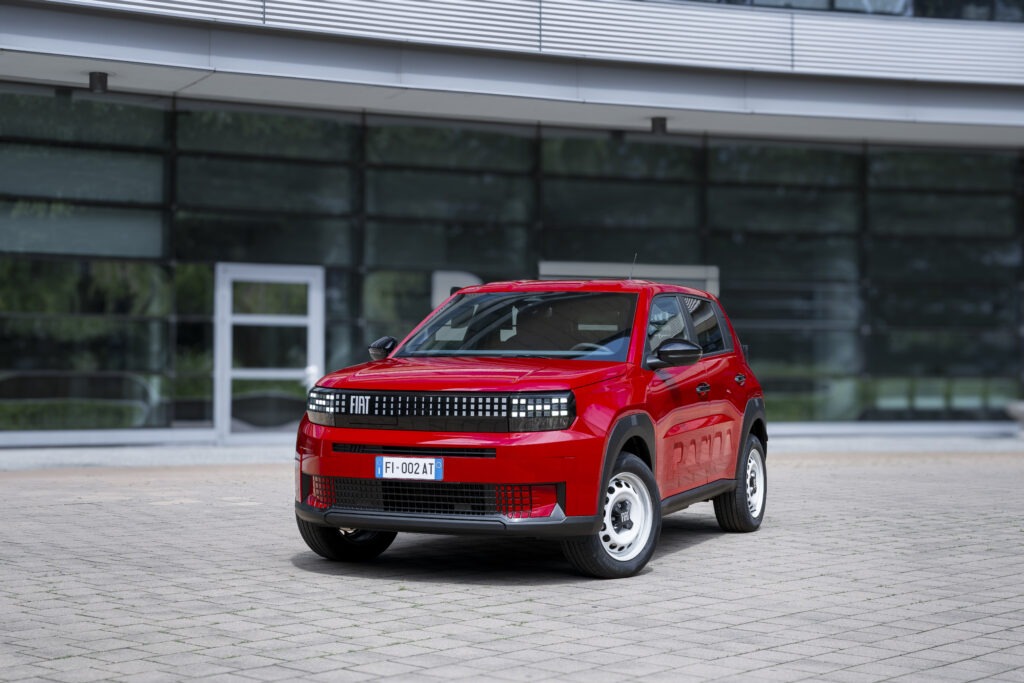
The Fiat Grande Panda has a distinctly square appearance. This harks back to the original angular model, which featured few curves. Today, it would not look out of place in an off-road environment, despite being built for urban use.
Fiat has kept the design of the BEV and MHEV variants similar, with both featuring the same body style. The smooth lighting panel features an array of cube LED lights across the grill. Fiat states this represents windows of the carmaker’s iconic Lingotto building in Turin. The lights also provide a different headlight silhouette, with the main beam in an X pattern.
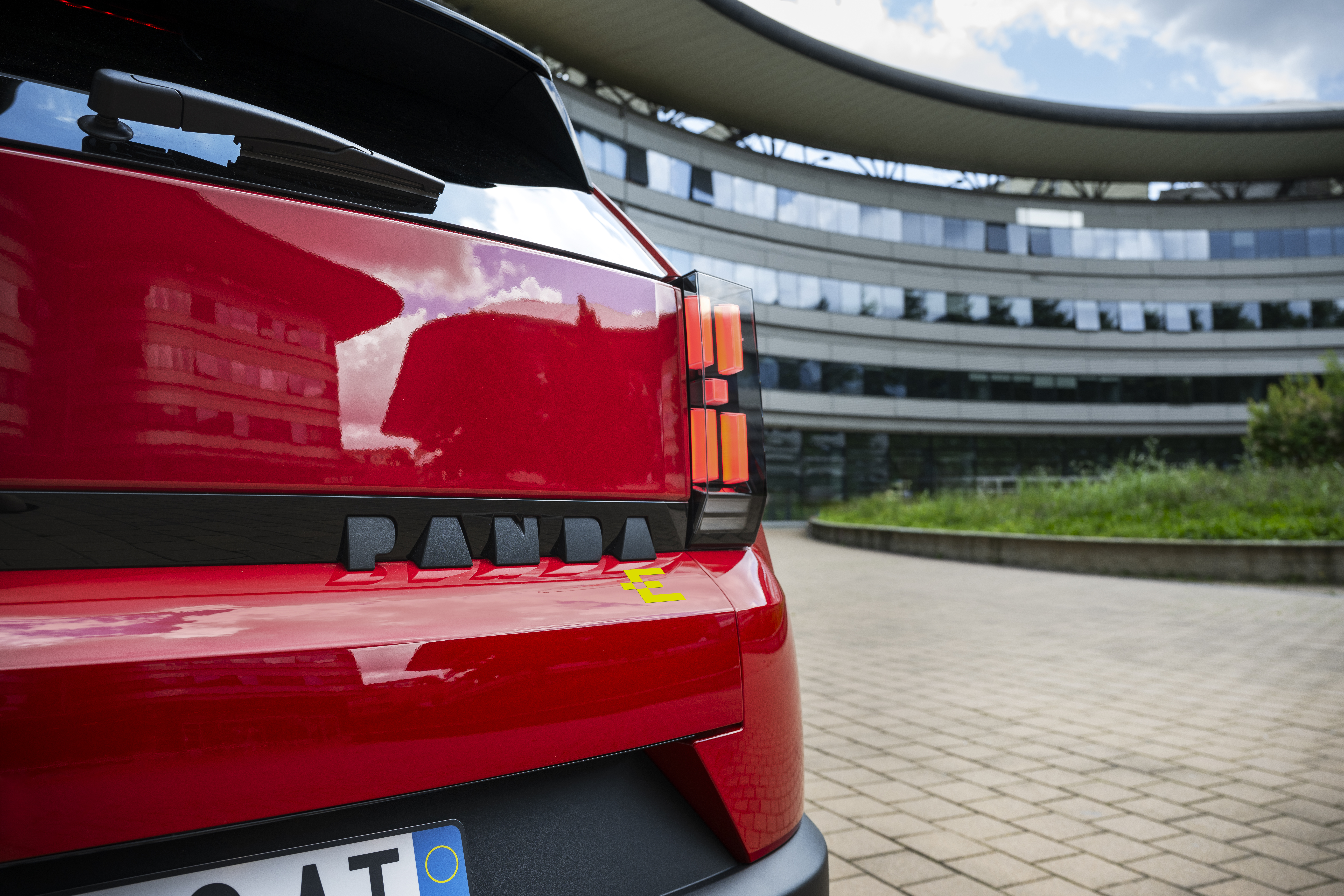
On the BEV variant, the Fiat badge pops open to reveal the charging plug. An integrated AC cable is also available as an optional extra to aid convenience.
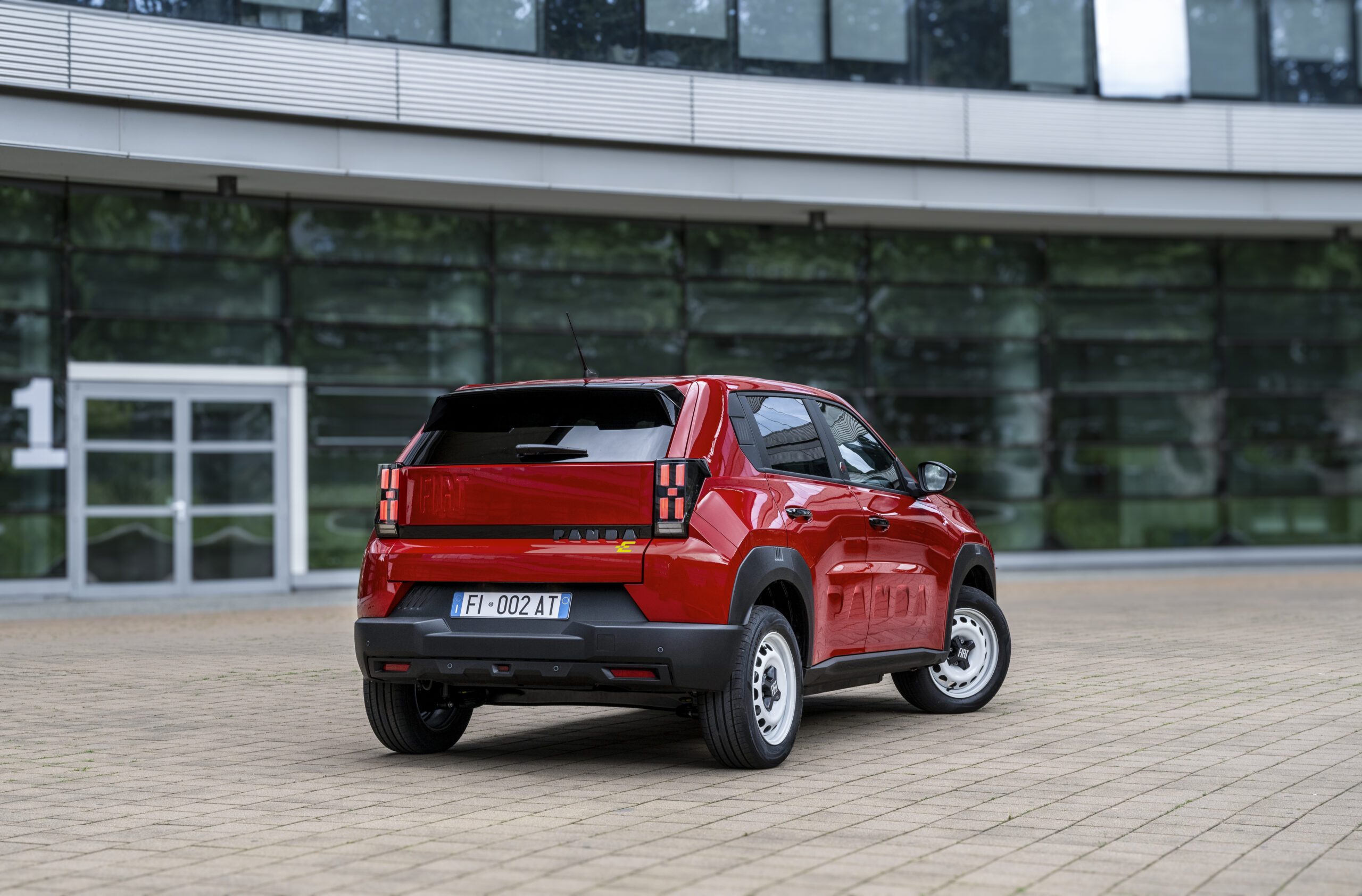
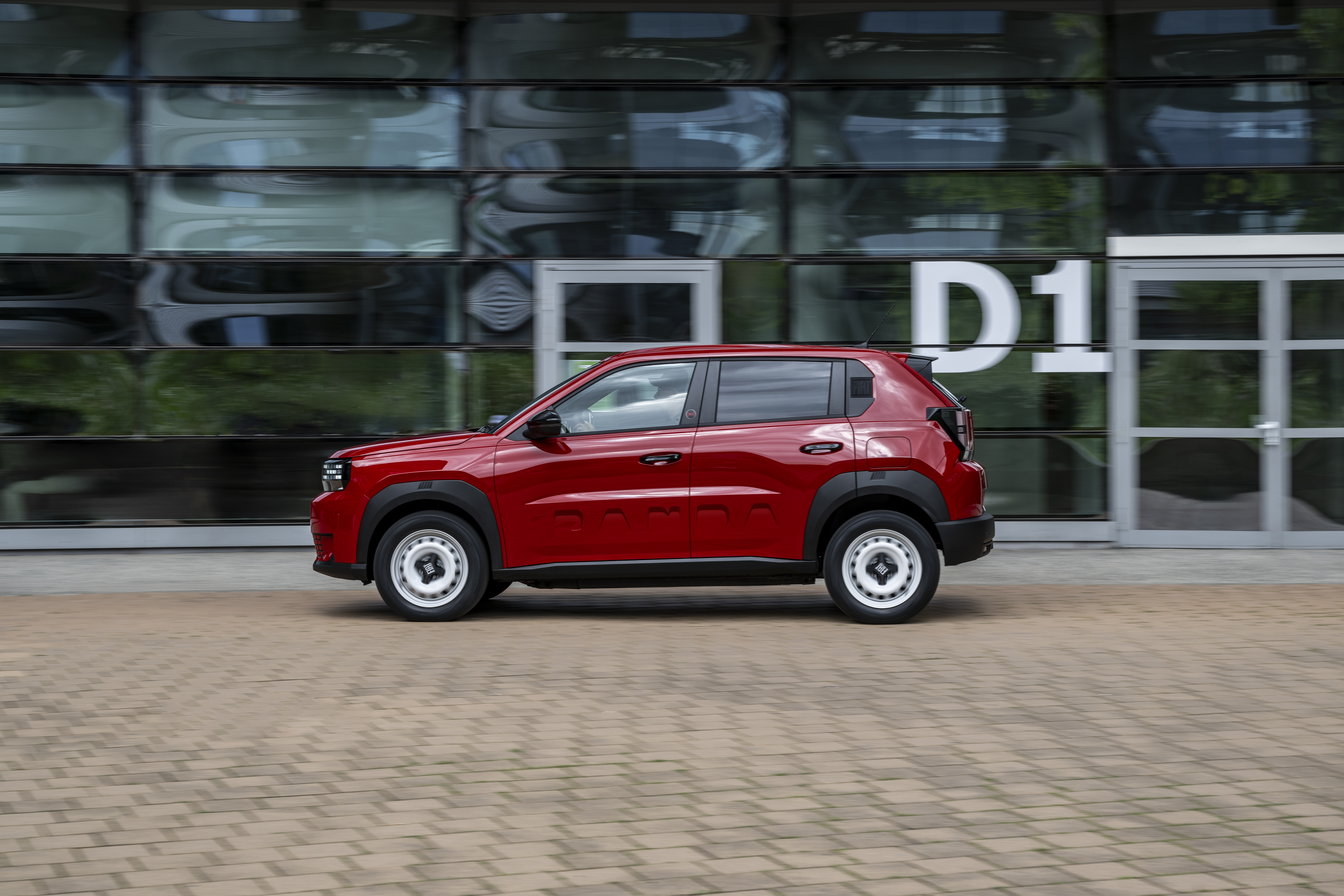
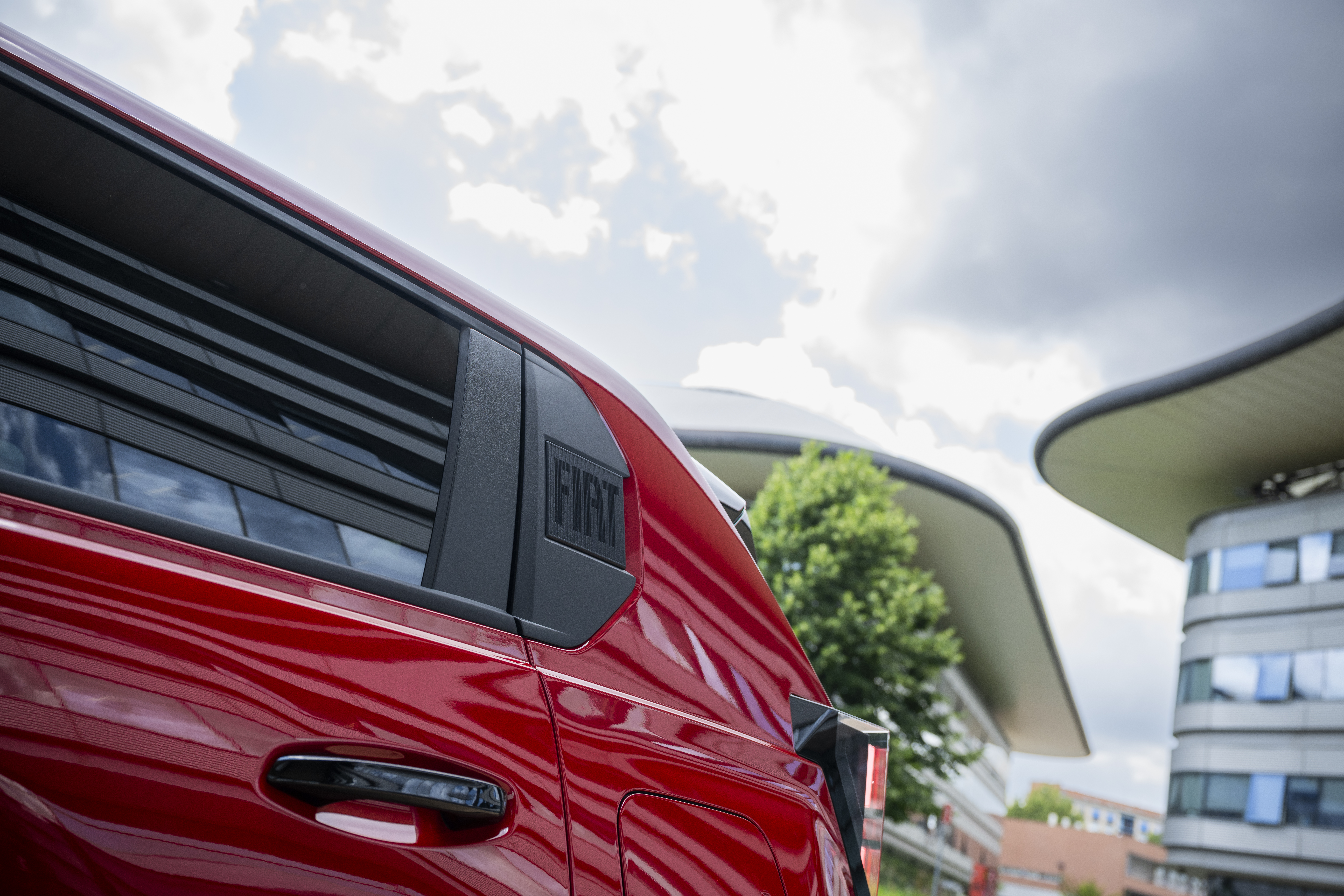
Another retro-design touch is the Panda name stamped across the lower portion of the doors. This gives the car a robust look, making the doors appear thick and heavy. The side profile highlights the boxy look of the model, with sharp lines throughout. The plastic wheel arches break up the body-colour flow, also giving the model a rugged look.
The rear of the car features a high window and cubed lights in a cross formation. Additionally, its high stance helps make it look bigger than it actually is.
A sustainable interior
Fiat continued its retro design cues inside the Grande Panda. The oval dashboard and centre console are designed in the shape of the Lingotto building’s rooftop test track.
The model features a 10.25-inch touchscreen and a smaller screen for the driver display. The steering wheel is quite chunky and ergonomic, with the increasingly popular flat bottom and top, to aid driver legroom.
The interior features plenty of physical buttons, especially those for the climate control system. They are surrounded by some inexpensive-looking plastics, however.
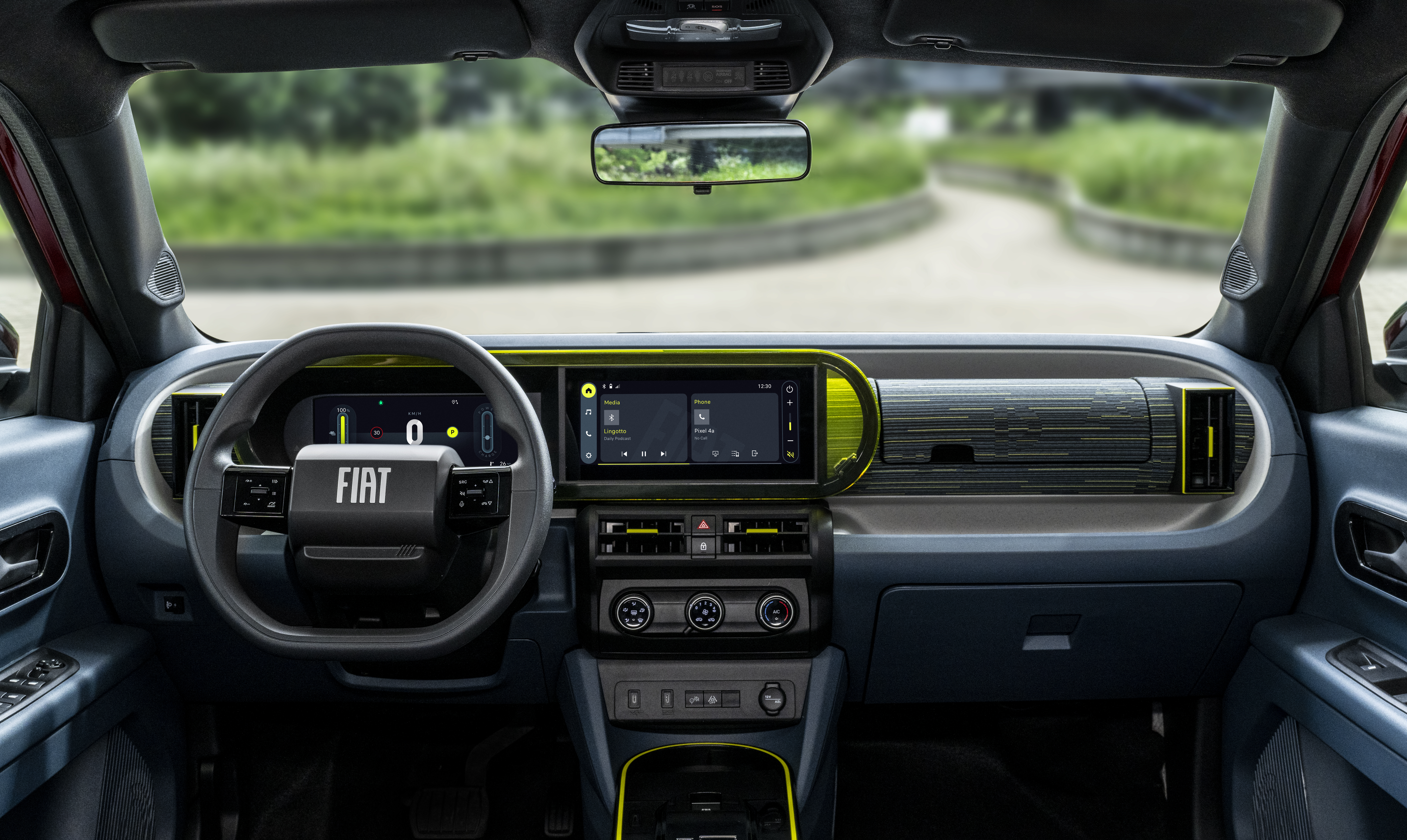
Fiat has highlighted its use of sustainable materials. Each Grande Panda contains the recycled material from 140 drinks cartons. The carmaker has also introduced Bambox in the top-range La Prima version. 33% of this fabric is made from pure bamboo fibres, which is used to wrap the dashboard.
The seating is comfortable in both the front and rear of the vehicle. Back-seat passengers do get more legroom in the MHEV version. Meanwhile, the high roof line provides plenty of headroom, even in such a small car.
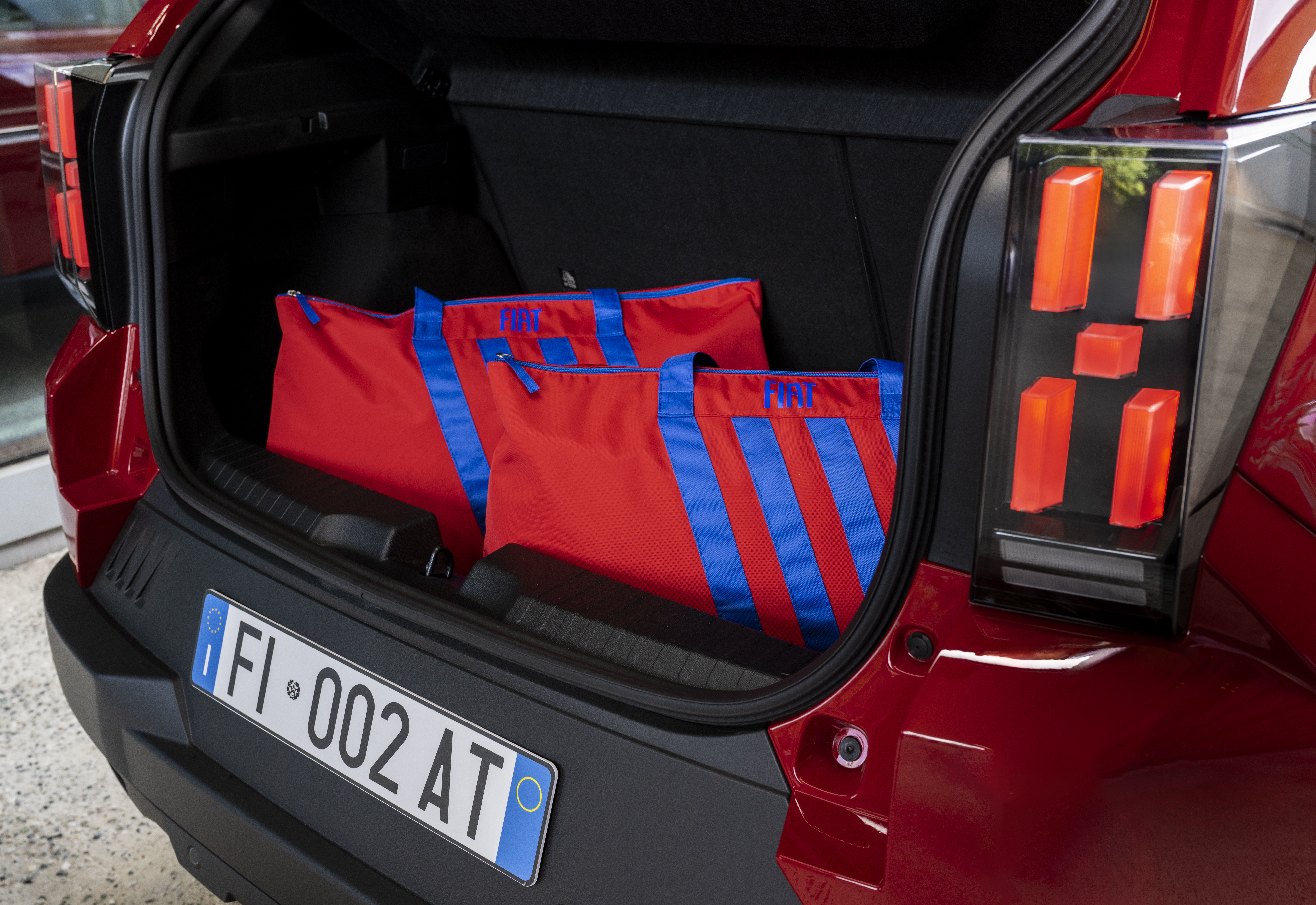
The model is also very practical, with ample door pockets in the front and rear. However, there is no floating element to the centre console, reducing the potential storage up front. The boot size is good for the class, with 361 litres in the BEV version, expanding to 412 litres in the MHEV.
Power and performance
Due to its size, the Fiat Grande Panda is suited to city and urban use. The steering provides good feedback and invokes confidence, while not being especially dynamic.
With a higher ride height, the car rides over bumps and road imperfections well, without being too soft. However, it feels planted, even in quick changes of direction, making it fun to drive.
The electric powertrain comes with a 44kWh battery. This delivers 199 miles (320km) of driving range through the 83kW motor, according to WLTP figures. The model has a top speed of 82mph and can accelerate from 0-62mph in around 11 seconds.
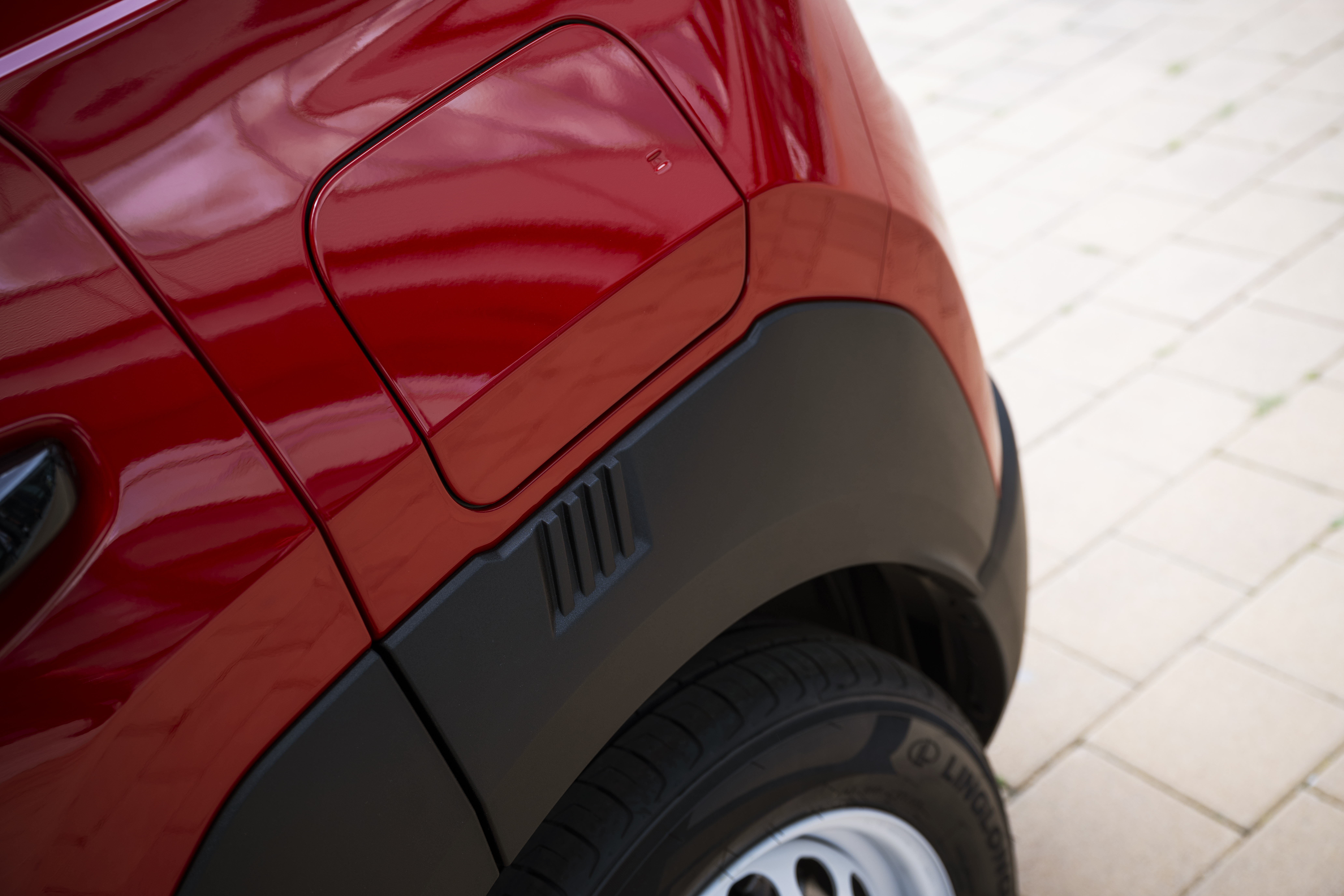
The front charging port can charge at up to 7kW, providing a 20% to 80% boost in four hours and 20 minutes. However, another charge port at the rear allows for DC rapid charging up to 100kW, completing a charge in 27 minutes.
The MHEV version sees a 48-volt system mated with a 1.2-litre three-cylinder turbocharged engine. The model also features a 23kW e-motor through the six-speed dual-clutch transmission. The additional electric power helps the model achieve an estimated CO2 output of just 117g/km.
Overall, the Fiat Grande Panda will certainly stand out on the road. It is likely to appeal to buyers who favour looks over practicality, but they will not be disappointed by the model’s performance. While competitors may have an advantage in certain areas, the Grande Panda provides an exciting retro design change.
View the Autovista Group dashboard, which benchmarks the Grande Panda in Austria, Germany, Italy and the UK. The interactive dashboard presents new prices, forecast residual values, and SWOT (strengths, weaknesses, opportunities, and threats) analysis.