
Is it the end of the road for digital dashboards?
24 November 2025

In recent years, touchscreens and digital interfaces have transformed the car interior. However, with issues surrounding safety, usability and residual values (RVs), are knobs, switches and buttons set to reclaim the dashboard? Autovista24 web editor James Roberts explores the topic.
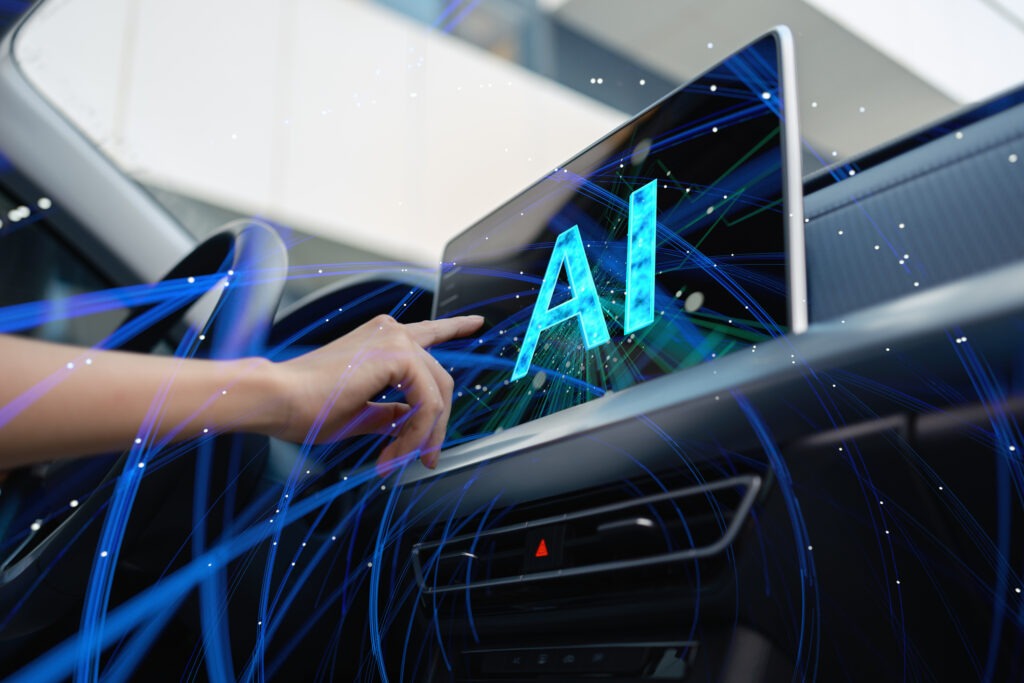
As the automotive industry evolves, so does the interior of vehicles. Over the last couple of decades, the design of car interiors has become increasingly digitised. Carmakers have trended towards using fewer physical elements such as buttons and switches, instead prioritising central screens and haptic controls.
From housing essential analogue instruments such as speedometers and fuel gauges, the dashboard has changed significantly over the last century. The 1980s and 1990s heralded a growing digital influence, and this trend has continued at a revolutionary pace.
The growth in electric vehicle (EV) adoption has been central to this shift. Additionally, prioritising screens provides a cost-saving measure for manufacturers. Whether electrified or powered by an internal-combustion engine (ICE), car dashboards have experienced a profound shake up. But have things moved too fast?
Too digital too soon?
‘There has been a very clear trend towards reducing or even eliminating physical buttons in recent years,’ stated Christoph Ruhland, director of business development at Autovista Group. One example of this trend is Tesla. The brand’s large infotainment screens with their drawing pad abilities became a popular concept.
‘Tesla initiated this development and pushed it to an extreme with the facelift of the Model 3, where it removed the indicator stalk entirely. This proved highly impractical in everyday driving and has since been reversed,’ Ruhland commented.
Tesla’s embracing of an almost entirely digital environment pushed established automotive design leftfield, and proved hugely influential. Over the last 15 years, major manufacturers including Hyundai, BMW, Mercedes-Benz, and Volkswagen (VW) have followed this trend. However, as larger screens and digital elements began dominating, the shift proved too radical for some customers.

‘Many buyers, especially in the used-car market, were just getting used to the idea of touchscreens for basic functions. Suddenly, almost all of the ‘minor’ functions; infotainment, heating, ventilation, air conditioning and heated seats, were only accessible via touchscreen menus. For drivers, this was a step too far, too fast,’ stated Robert Redman, senior market analyst, consulting services at Autovista Group.
Digital decisions
Hyundai emerged as one of the first major manufacturers to change its approach to digitisation. Initially, the Korean carmaker widely embraced touchscreens, even adding them to steering wheels in a concept car.
‘As we were adding integrated infotainment screens in our vehicles, we also tried putting touchscreen-based controls, and people did not prefer that,’ admitted Ha Hak-soo, vice president of design North America, Hyundai, as reported by InsideEVs.

Hyundai’s U-turn towards physical controls has been evident in the updated Tucson. A 2024 refresh saw a haptic control stick added to the SUV, as well as physical dials for climate control. This is a theme mirrored in electric siblings such as the Ioniq 5 and Ioniq 6.
‘The real question is not whether digitalisation was too fast, but how much of it is actually sensible and usable,’ said Ruhland. ‘Some functions were moved to screens mainly for cost reasons, and this has sometimes been unhelpful for real-world usability. Digitalisation only makes sense when it genuinely improves the driver’s experience.
Big names getting physical
Along with Hyundai, a raft of major OEMs cooled their touchscreen transition and cockpit digitisation in recent years.
Magnus Östberg, head of software at Mercedes-Benz, told Autocar that data pointed to physical buttons being better. This blunt appraisal hints at much wider, nuanced trends. Östberg outlined a vision for a balance between physical controls and a data-driven, software-defined environment.
Volkswagen (VW) has been a notable player in the changing approach towards an overtly digital interior. The brand faced criticism following the rollout of capacitive steering wheels and touch sliders in 2019.
This centred around models including the Golf Mk8 and the electric ID. series. It even filtered into Ford models based on VW’s MED platform, such as the Ford Explorer. Criticism centred on accidental inputs and difficulty using touch-sensitive controls, soon making automotive headlines. This year, Thomas Schäfer, CEO of Volkswagen, confirmed the return to physical buttons on the steering wheel in VW models.

This is something the carmaker has emphasised will continue across future models. This includes providing a digital experience that ‘supports the driver, rather than competing for attention.’ VW revealed to Autovista24 that future interiors will combine ‘tactile clarity with intelligent digital support. Physical where it matters, and digital where it adds value.’
‘Our goal is to make every interaction in a VW feel instantly natural,’ Andreas Mindt, head of Volkswagen brand design, told Autovista24. ‘Customers told us clearly what they expect: intuitive controls, essential physical buttons, and digital functions that support rather than overwhelm. This balance of tactile clarity and smart technology is the foundation of our future interiors.’
Safety dictating design?
User experience and consumer preference aside, one key feature is forcing the future of vehicle interiors: safety.
The European New Car Assessment Program (Euro NCAP) recently focused on safety concerns linked to digital and touchscreen proliferation. From January 2026, a coveted five-star safety rating can only be achieved via the implementation of prominent physical elements.
These include physical controls for five critical functions spanning indicators, hazard lights, horn, windscreen wipers and the eCall emergency system. This signals a significant milestone in how manufacturers will approach the in-car digital and physical balance.
‘The updated rules place much stronger emphasis on safe driver engagement and on the ability to operate essential functions with minimal distraction,’ added Ruhland. ‘This development is not only driven by safety protocols, but also by the simple reality that physical switches often provide better usability in dynamic driving situations.’
While not legally binding, Euro NCAP ratings provide a powerful marketing tool, guiding wider automotive safety trends.
‘As a result, manufacturers targeting the highest safety ratings will need to reintroduce strategically placed physical controls for key functions, supported by voice commands where they genuinely reduce distraction and add value. The likely outcome is a more balanced approach in the coming years. Digital interfaces where they make sense, but physical controls where safety and intuitive operation demand them,’ highlighted Ruhland.
Residual value impact
Increased digital and touchscreen elements are nothing new. As a result, their desirability in the used-car market is a major factor. Particularly when it comes to the impact on RVs. Functionality has proven a key factor in RV determination.
‘Ease of use has always been important when it comes to cockpit controls,’ Redman outlined. ‘The actual location and functionality will vary from model to model, of course, but most buyers are driving their car for three or four years, or increasingly longer terms, so will soon learn the changes in their ‘new’ car.

‘However, the ease of use and accessibility will have a bearing on the first impressions, and systems that appear overly complicated can be off-putting at first, and this will affect saleability and impact RVs,’ he said.
Additionally, the desirability of digital functionality varies across the world. Many Chinese EV manufacturers trend towards cockpit standardisation. This creates a uniform appearance across brands that hampers individuality.
Ruhland stated: ‘The result is a form of monotony that makes it difficult for brands to differentiate themselves. Manufacturers will now need to rediscover a clearer family identity inside the vehicle. A distinctive cockpit can be as important to brand perception as the exterior design.’
Space for differentiation
There is some space for differentiation in Europe, and physical controls can help shape this. Premium brands continue to explore a more bespoke and individual approach to cockpit design. For many European OEMs, physical controls can convey a sense of luxury and refinement, reinforcing brand identity. According to Ruhland, ‘high-quality buttons offer a level of precision, feedback and the way they feel to the touch that a touchscreen cannot replicate.’
‘In our work, we have identified around 30 drivers of RVs, and cockpit design directly impacts a number of them,’ added Ruhland. ‘These include emotion and appeal, timelessness, interior attractiveness, perceived quality, suitability for everyday use, and practicality and ergonomics, to name the most important ones.
‘The influence is real, but it should not be overstated. A vehicle that offers no physical controls at all is likely to have disadvantages in the used-car market, as it may be seen as less intuitive and less user-friendly.
‘However, once a car offers a healthy balance between digital interfaces and physical buttons, the impact on RVs becomes more or less neutral. Additional high-quality physical controls that improve usability and provide a more premium impression can even be supportive of RV performance,’ Ruhland said.
Digital cost saving
Cleaner aesthetics and enhanced user experience may seem the obvious driver for a simplified interior. However, this is not the most important factor. The shift towards digital interfaces has been driven significantly by strategic and economic needs.
Streamlining multiple functions into a digital mode can replace many wired and manufactured components. This can ultimately ease the need for materials and wider supply chain demands.
‘If we are honest, the main driver behind this development has not been ergonomics or better usability, but cost,’ added Ruhland. ‘Every button requires hardware, wiring, and ongoing software support, and removing them saves money.’
‘I believe the future will be a hybrid interface that combines a mainly digital cockpit with physical controls where they genuinely add value,’ added Ruhland. ‘Digital screens will remain the core of the interaction, but physical buttons will support key functions that benefit from immediacy, tactility or reduced distraction.’
Coupled with this, digitisation has catalysed the introduction of over-the-air (OTA) updates. This is another means of saving money, reducing the need for recalls, and streamlining feature upgrades or fixes.
‘I suspect that we have already reached a good balance between physical and touchscreen controls,’ commented Redman. ‘Drivers need to be able to quickly and safely access certain functions, such as infotainment, heating, ventilation and wipers while driving.
‘This is not going to change in the future as drivers still need to be able to prioritise their primary focus on the process of driving and negotiating traffic and not be distracted trying to negotiate a menu to demist their windscreen,’ he concluded.